 US & Canada:
  Email:


 Access IFU & SDS
Summary & Explanation
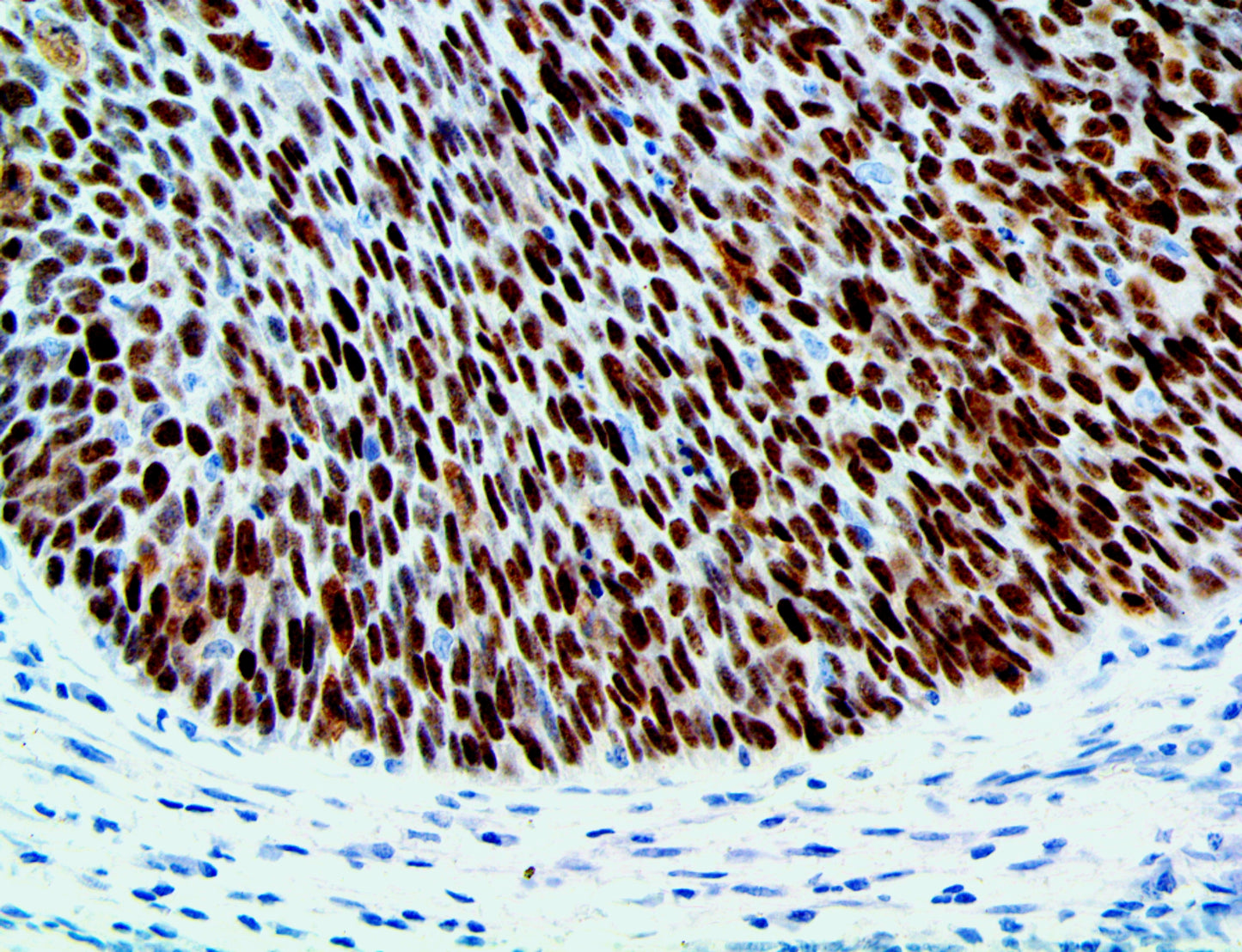
{"type":"root","children":[{"type":"paragraph","children":[{"type":"text","value":"p14 ARF (also called ARF tumor suppressor, ARF, p14ARF) encoded by the p16 tumor suppressor gene is an alternate reading frame protein product of the CDKN2A locus (i.e. INK4a/ARF locus). p14 ARF accumulates mainly in the nucleolus where it forms stable complexes with NPM or MDM2. These interactions allow p14 ARF to act as a tumor suppressor by inhibiting ribosome biogenesis or initiating p53-dependent cell cycle arrest and apoptosis, respectively. Both p16INK4a and p14 ARF are involved in cell cycle regulation. p14 ARF inhibits MDM2, thus promoting p53, which promotes p21 activation, which then binds and inactivates certain cyclin-CDK complexes, which would otherwise promote transcription of genes that would carry the cell through the G1/S checkpoint of the cell cycle. Loss of p14 ARF by a homozygous mutation in the CDKN2A (INK4A) gene will lead to elevated levels in MDM2 and, therefore, loss of p53 function and cell cycle control. p14 ARF, has been reported to be associated with the clinicopathological features of different cancers. Very commonly, cancer is associated with a loss of function of INK4a, ARF, Rb, or p53. Without ARF, MDM2 can inappropriately inhibit p53, leading to increased cell survival. The INK4a/ARF locus is found to be deleted or silenced in many kinds of tumors. It has been found that 41% breast carcinomas have p14 ARF defects and in a separate study, 32% of colorectal adenomas were found to have p14 ARF inactivation due to hypermethylation of the promoter. Homozygous deletions and other mutations of CDK2NA (ARF) have been found to be associated with Glioblastoma. p14 ARF expression has been found to be significantly associated with the risk of lung cancer."}]}]}
Antibody Type
Rabbit Monoclonal
Clone
RBT-p14
Isotype
IgG
Localization
Cytoplasmic
Dilution
1:25-1:100
Species Reactivity
Human
Immunogen
Synthetic peptide corresponding to the C-terminus of the human p14 ARF/CDKN2A.