 US & Canada:
  Email:


 Access IFU & SDS
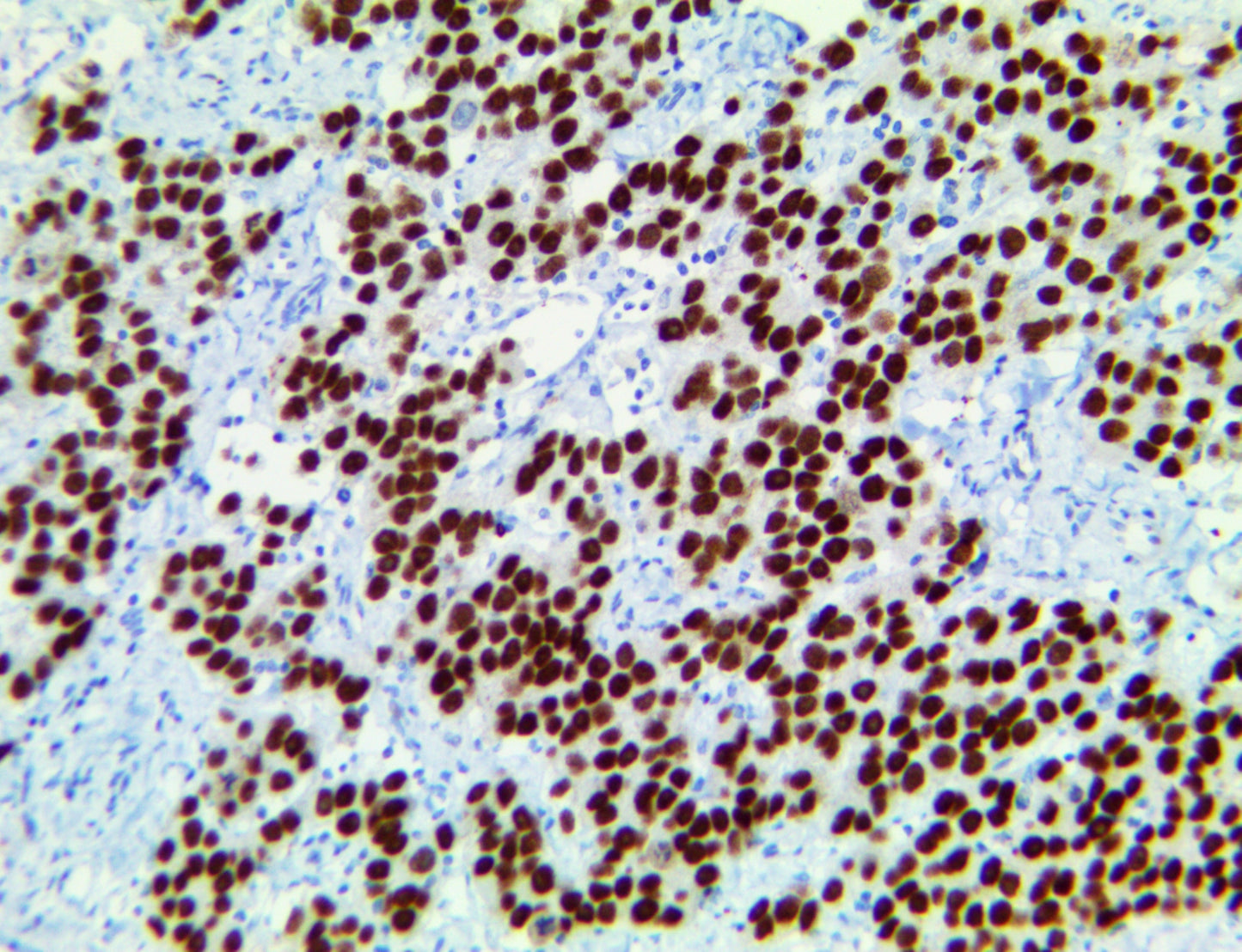
Summary & Explanation
{"type":"root","children":[{"type":"paragraph","children":[{"type":"text","value":"Homeobox protein Nanog is a transcriptional factor that helps embryonic stem cells (ESCs) maintain pluripotency by suppressing cell determination factors. In humans, this protein is encoded by the NANOG gene. Nanog is thought to function in concert with other factors such as Oct-4 and SOX2 to establish ESC identity. Nanog is highly expressed in cancer stem cells and thus may function as an oncogene to promote carcinogenesis. High expression of Nanog correlates with poor survival in cancer patients. Nanog is highly and specifically expressed in carcinoma in situ (CIS), embryonal carcinomas, and seminomas, but not in teratomas and yolk sac tumors. Additionally, it has been reported that Human embryonic stem cell genes OCT4, NANOG, STELLAR, and GDF3 are expressed in both seminoma and breast carcinoma. Positive Nanog expression is significantly associated with high-grade ovarian serous carcinoma and is absent in benign, borderline, and low-grade serous lesions. A study suggests the expression of Nanog exhibiting cellular shuttling behavior and increasing stromal distribution during the progression of cervical cancer. Recently it was suggested that Nanog overexpression, a hazard factor of differentiation, lymph node metastasis, and tumor size, may predicate decreased overall survival (OS) and disease-free survival (DFS) for lung cancer."}]}]}
Antibody Type
Rabbit Monoclonal
Clone
EP225
Isotype
IgG
Localization
Cytoplasmic
Dilution
1:50-1:200
Species Reactivity
Human
Immunogen
A synthetic peptide corresponding to residues of human Nanog protein