 US & Canada:
  Email:


 Access IFU & SDS
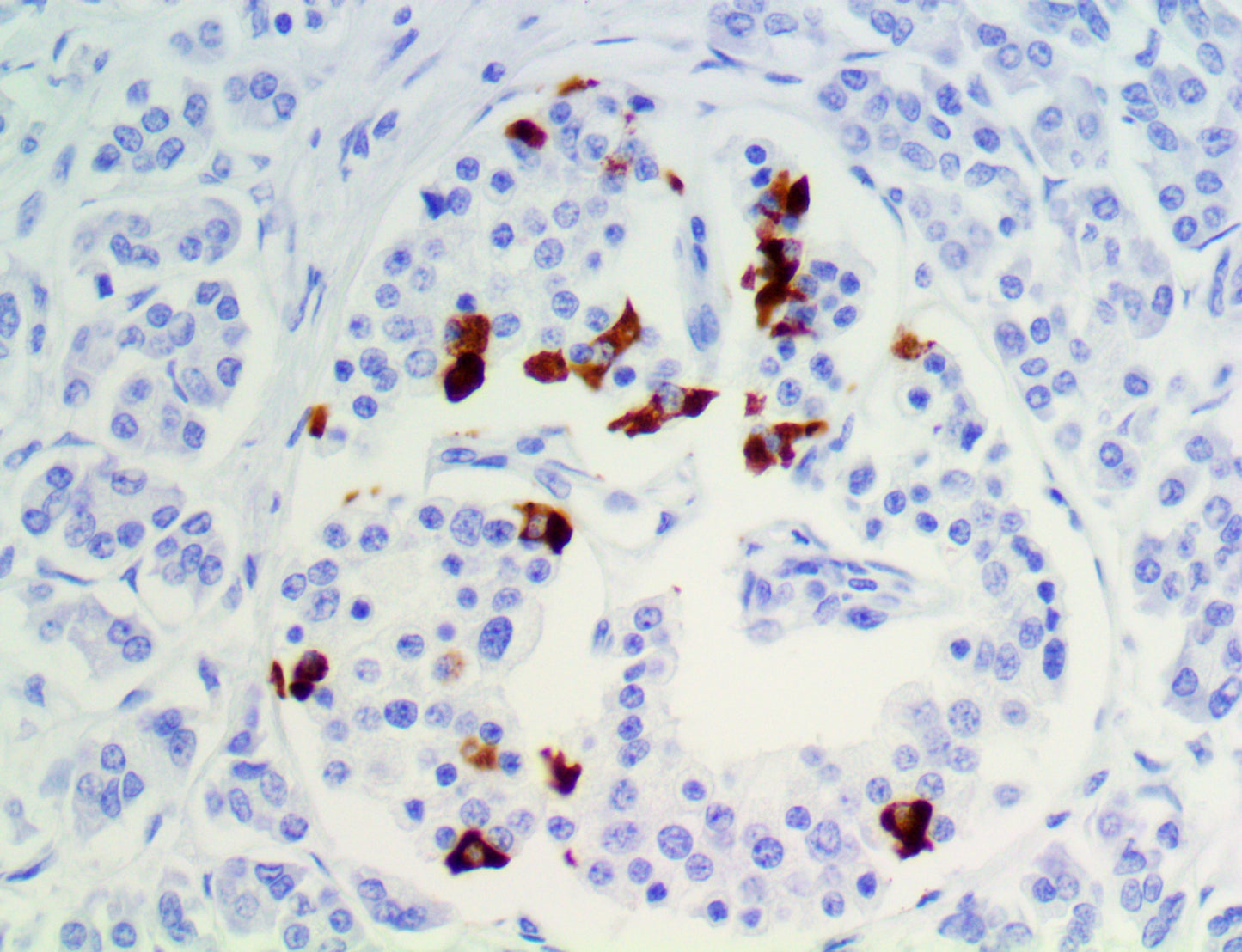
Summary & Explanation
{"type":"root","children":[{"type":"paragraph","children":[{"type":"text","value":"Somatostatin is a peptide hormone that regulates the endocrine system and affects neurotransmission and cell proliferation via interaction with G-protein-coupled somatostatin receptors and by inhibition of the release of numerous secondary hormones. Somatostatin has two active forms produced by alternative cleavage of\n a single preproprotein: one of 14 amino acids; the other of 28 amino acids. Somatostatin is secreted not only by cells of the hypothalamus but also by the stomach, intestine, and delta cells of the pancreas. It binds to somatostatin receptors."}]},{"type":"paragraph","children":[{"type":"text","value":"Somatostatin is a useful marker of D-cells of pancreatic islet cells. D-cells are used to identify hyperplasia of the pancreatic islets. Most of these tumors are malignant, giving rise to Somatostatinomas. Somatostatin suppresses gastric acid secretion, gallbladder contractions and pancreatic enzyme secretion."}]}]}
Antibody Type
Mouse Monoclonal
Clone
BSB-113
Isotype
IgG2a/K
Localization
Cytoplasmic
Dilution
1:250-1:1000
Species Reactivity
Human
Immunogen
Synthetic peptide corresponding to the N-terminus of the human somatostatin protein.