 US & Canada:
  Email:


 Access IFU & SDS
Summary & Explanation
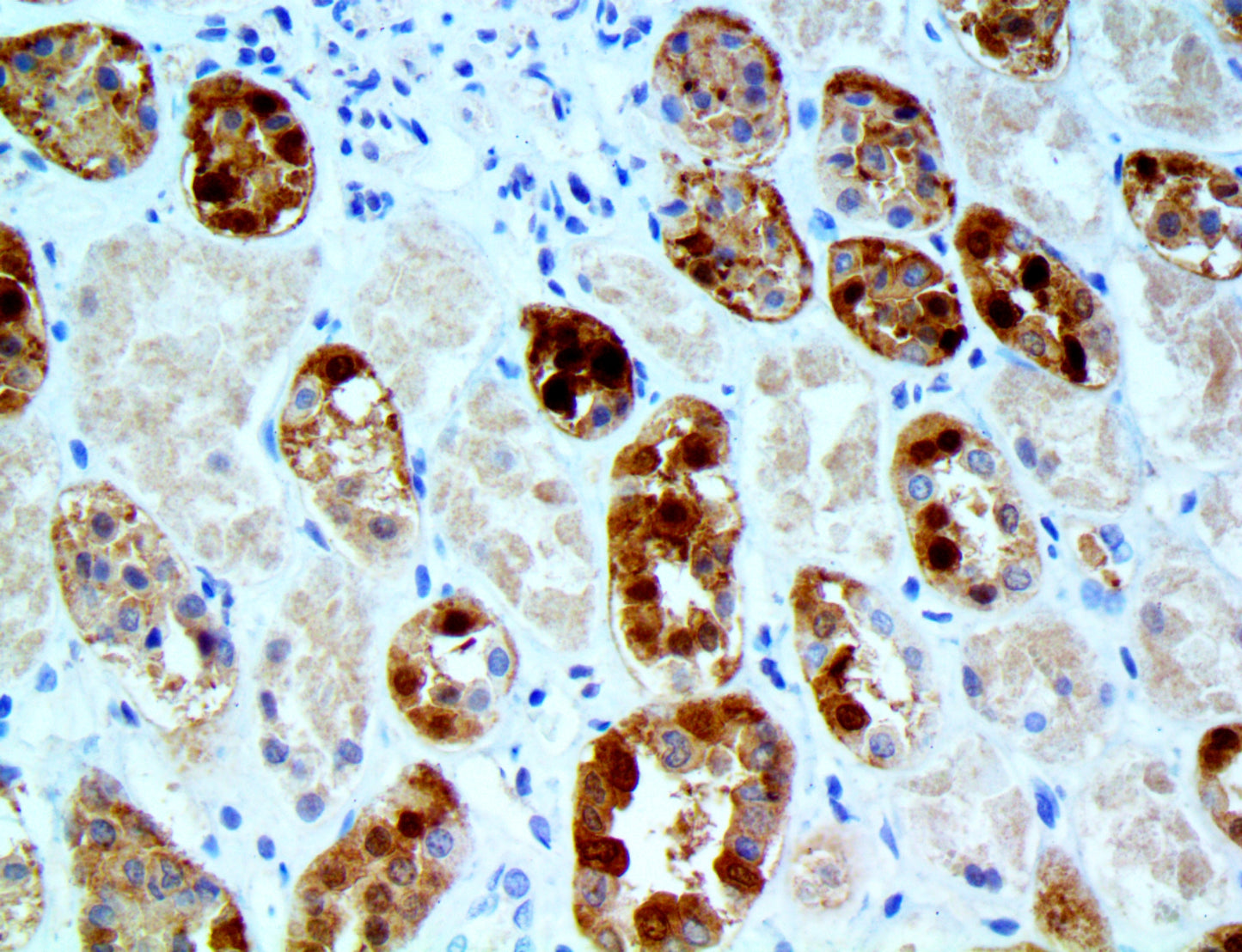
{"type":"root","children":[{"type":"paragraph","children":[{"type":"text","value":"Parvalbumin is a calcium-binding albumin protein with low molecular weight (typically 9-11 kDa), structurally related to calmodulin and troponin C and a stable protein involved in calcium signaling. Parvalbumin plays a role in many physiological processes, namely cell-cycle regulation, second messenger production, muscle contraction, organization of microtubules and phototransduction. Parvalbumin is localized in fast-contracting muscles, where its levels are highest, as well as in the brain and some endocrine tissues. In normal kidney, parvalbumin has been shown to be limited to the distal tubular and collecting duct cells (the intercalated cells). Studies have demonstrated that parvalbumin may be a suitable IHC marker for distinguishing primary and metastatic chromophobe carcinoma from conventional (clear cell) and papillary renal cell carcinoma. Parvalbumin is strongly expressed in almost all primary, as well as metastatic, chromophobe renal cell carcinoma (RCC) (100%) and oncocytoma (69%), but is essentially negative in other types of RCCs, such as clear cell RCC and papillary RCC. Additionally, alterations in the function of parvalbumin-expressing neurons have been implicated in various areas of clinical interest such as Alzheimer’s disease and age-related cognitive defects."}]}]}
Antibody Type
Rabbit Monoclonal
Clone
EP300
Isotype
IgG
Localization
Cytoplasmic
Dilution
1:25-1:100
Species Reactivity
Human, Mouse
Immunogen
Synthetic peptide corresponding to residues of human Parvalbumin protein.