 US & Canada:
  Email:


 Access IFU & SDS
Summary & Explanation
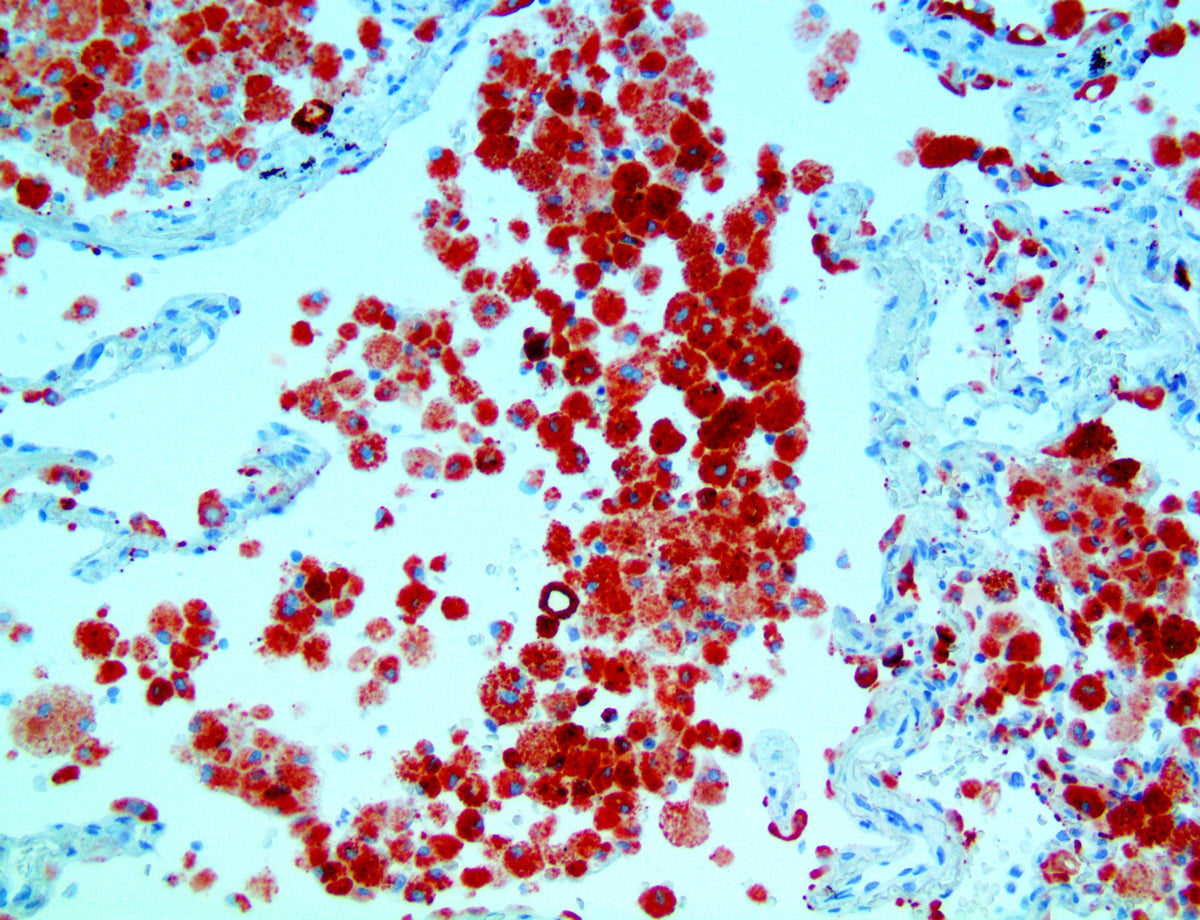
{"type":"root","children":[{"type":"paragraph","children":[{"type":"text","value":"The activation peptides of aspartic proteinases play a role as inhibitors of the active site. These peptide segments, or pro-parts, are deemed important for correct folding, targeting, and control of the activation of aspartic proteinase zymogens. The pronapsin A gene is expressed predominantly in lung and kidney. Its translation product is predicted to be a fully functional glycosylated aspartic proteinase precursor containg an RGD motif and an addition 18 residues at its C-terminus. In normal tissue, anti-Napsin A labels type II pneumocytes in adult lung and epithelial cells in kidney tissues. In abnormal tissues, Napsin A is a useful marker for lung adenocarcinoma."}]}]}
Antibody Type
Mouse Monoclonal
Clone
BSB-112
Isotype
IgG1/K
Localization
Cytoplasmic
Dilution
1:100-1:500
Species Reactivity
Human
Immunogen
Synthetic peptide corresponding to residues of human Napsin A protein.