 US & Canada:
  Email:


 Access IFU & SDS
Summary & Explanation
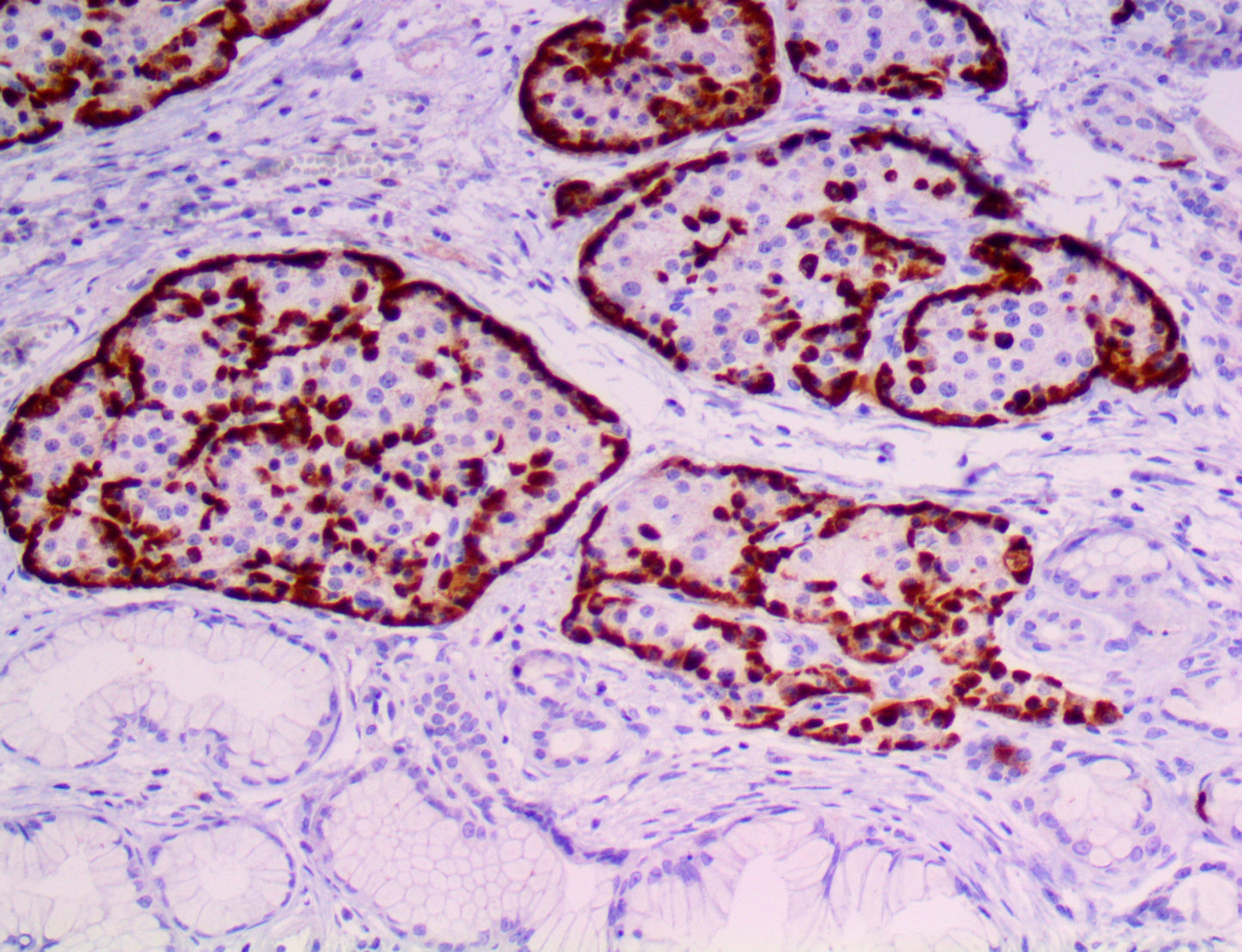
{"type":"root","children":[{"type":"paragraph","children":[{"type":"text","value":"Glucagon is a 29-amino acid polypeptide acting as an important hormone in carbohydrate metabolism. The hormone is synthesized and secreted from alpha cells of the islets of Langerhans, which are located in the endocrine portion of the pancreas. Abnormally-elevated levels of glucagon may be caused by pancreatic"}]},{"type":"paragraph","children":[{"type":"text","value":"tumors such as glucagonoma, symptoms of which include necrolytic migratory erythema (NME), elevated amino acids and hyperglycemia. It may occur alone or in the context of Multiple Endocrine Neoplasia Type 1."}]},{"type":"paragraph","children":[{"type":"text","value":"Glucagon antibody detects glucagon-secreting cells and tumors such as glucagonomas. Studies show that approximately 80% of glucagonomas are malignant and these patients have a syndrome most often initially recognized by dermatologists. Symptoms include necrolytic migratory erythema as well as diabetes, anemia, stomatitis, weight loss, frequent venous thromboses, and in some instances, diarrhea and psychiatric disturbances. The diagnosis may be readily confirmed by the demonstration of elevated plasma glucagon concentration."}]}]}
Antibody Type
Mouse Monoclonal
Clone
BSB-111
Isotype
IgG1/K
Localization
Cytoplasmic
Dilution
1:250-1:1000
Species Reactivity
Human
Immunogen
Recombinant human glucagon protein.