 US & Canada:
  Email:


 Access IFU & SDS
Summary & Explanation
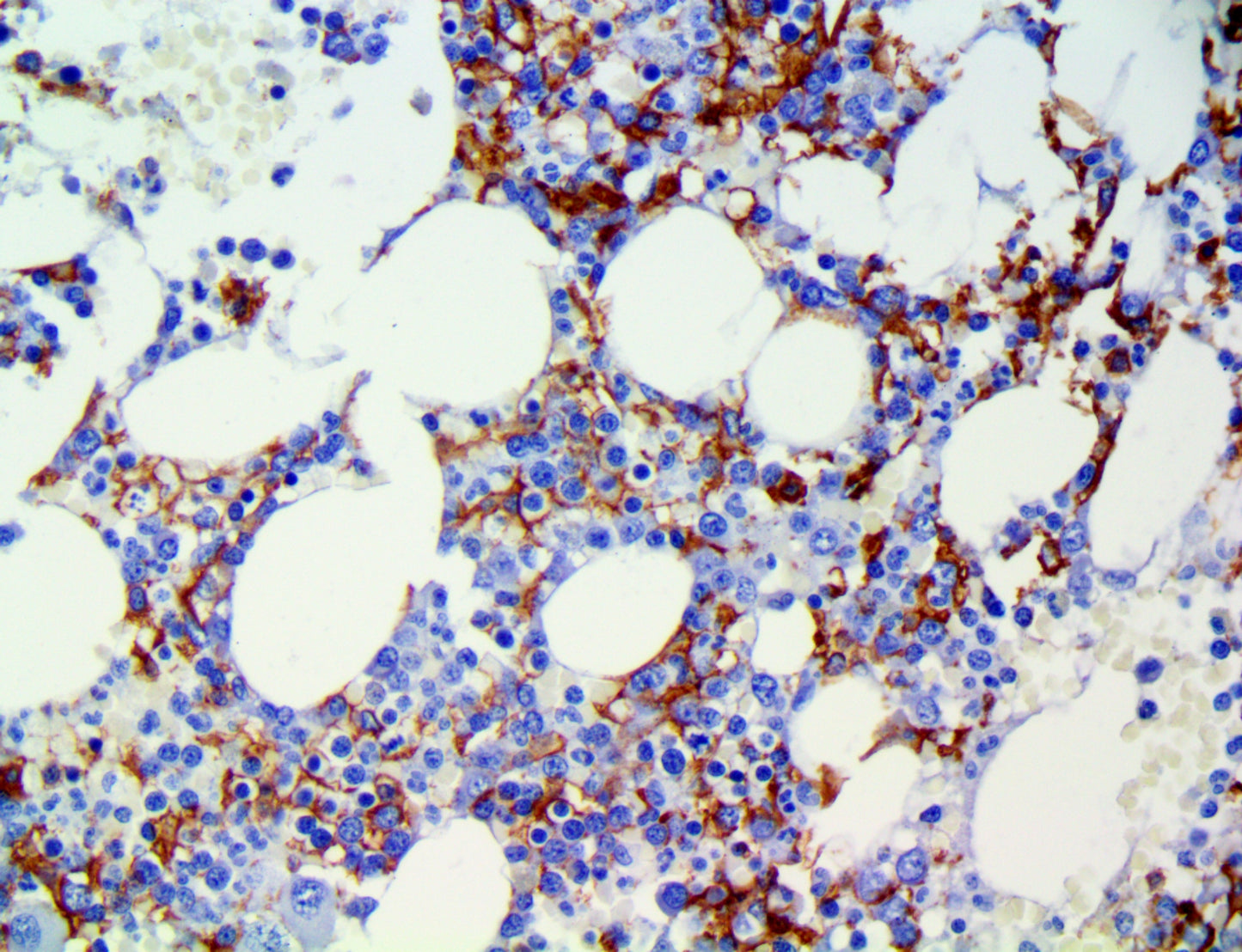
{"type":"root","children":[{"type":"paragraph","children":[{"type":"text","value":"CD16 is a low affinity Fc receptor, found on the surface of natural killer cells, neutrophil polymorphonuclear leukocytes, monocytes and macrophages. CD16 has been identified as Fc receptors FcγRIIIa (CD16a) and FcγRIIIb (CD16b). These receptors bind to the Fc portion of IgG antibodies which then activates NK cells for antibody-dependent cell-mediated cytotoxicity. A lack of CD16 in a given population of neutrophils may indicate prematurity, as could be caused by a left shift due to neutrophilic leukocytosis induced by tissue necrosis or bacterial infection."}]},{"type":"paragraph","children":[{"type":"text","value":"The IHC of CD16 is useful in the differential diagnosis of hepatosplenic gamma delta T-cell lymphoma and gamma delta T-cell large granular lymphocyte leukemia from other peripheral T-cell lymphomas, such as mucosal and cutaneous gamma delta T-cell lymphoma. A significant decrease can be seen in the number of granulocytes expressing CD16 in chronic myelomonocytic leukemia compared to chronic myelogenous leukemia and control bone marrow biopsy, probably related to dysgranulopoiesis. It has also been demonstrated that colorectal carcinoma patients with high CD16+ cell infiltration is associated with improved overall survival after adjusting for known prognostic factors and this association was independent from CD8+ lymphocyte infiltration and presence of metastases."}]}]}
Antibody Type
Rabbit Monoclonal
Clone
EP364
Isotype
IgG
Localization
Cytoplasmic, Membranous
Dilution
1:50-1:200
Species Reactivity
Human
Immunogen
Synthetic peptide corresponding to residues of human CD16 protein.