 US & Canada:
  Email:


 Access IFU & SDS
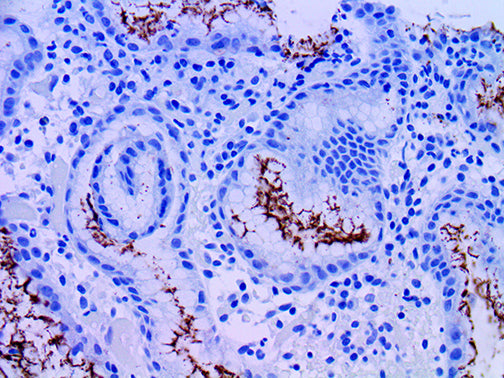
Summary & Explanation
{"type":"root","children":[{"type":"paragraph","children":[{"type":"text","value":"Helicobacter pylori is a helix-shaped Gram-negative bacterium about 3 μm long with a diameter of about 0.5 μm. It is microaerophilic; that is, it requires oxygen, but at lower concentration than is found in the atmosphere. It contains a hydrogenase which can be used to obtain energy by oxidizing molecular hydrogen (H2) produced by intestinal bacteria. It produces oxidase, catalase, and urease. H. pylori has four to six lophotrichous flagella; all gastric and enterohepatic Helicobacter species are highly motile owing to flagella. H. pylori’s helical shape (from which the genus name is derived) is thought to have evolved to penetrate the mucoid lining of the stomach. Strains of H. pylori that produce high levels of two proteins, vacuolating toxin A (VacA) and the cytotoxin-associated gene A (CagA), appear to cause greater tissue damage than those that produce lower levels or that lack those genes completely."}]}]}
Antibody Type
Rabbit Monoclonal
Clone
EP279
Isotype
IgG
Localization
Cell Wall
Dilution
1:50-1:200
Species Reactivity
Human
Immunogen
Helicobacter pylori.