 US & Canada:
  Email:


 Access IFU & SDS
Summary & Explanation
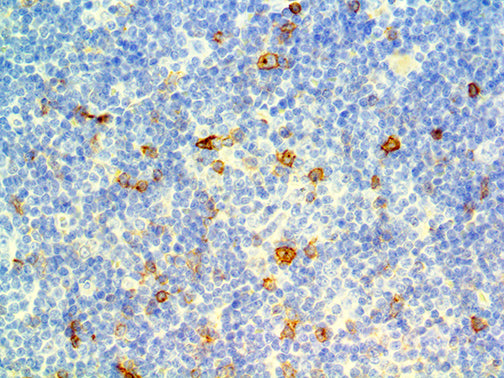
{"type":"root","children":[{"type":"paragraph","children":[{"type":"text","value":"OX-40 also known as CD134 and Tumor Necrosis Factor Receptor Superfamily Member 4 (TNFRSF4), is a member of the TNFR-superfamily of receptors which is not constitutively expressed on activated CD4 and CD8 T cells as well as a number of other lymphoid and non-lymphoid cells, unlike CD28. OX40 and its binding partner, OX40L (CD252), are costimulatory signals from OX40 to a conventional T cell to promote division and survival, augmenting the clonal expansion of effector and memory populations as they are being generated to antigen. OX40 and OX40L also regulate cytokine production from T cells, antigen-presenting cells, NK cells, and NKT cells, and modulate cytokine receptor signaling. In line with these important modulatory functions, OX40/OX40L interactions have been found to play a central role in the development of multiple inflammatory and autoimmune diseases. Besides the essential role played by OX40 signaling in generating memory CD4 T cells, recent reports show that it also has a unique role in generating memory CD8 T cells. In addition, recent genome-wide association studies have identified single-nucleotide polymorphisms of the OX40L and OX40 genes that are related to cardiovascular diseases and SLE, providing direct evidence for the involvement of the OX40-OX40L interaction in human diseases. OX40 is a potent costimulatory receptor that can potentiate T-cell receptor signaling on the surface of T lymphocytes, leading to their activation by a specifically recognized antigen. In particular, OX40 engagement by ligands present on dendritic cells dramatically increases the proliferation, effector function, and survival of T cells. Preclinical studies have shown that OX40 agonists increase antitumor immunity and improve tumor-free survival by increasing T and B cell responses to reporter antigen immunizations, led to preferential upregulation of OX40 on CD4(+) FoxP3(+) regulatory T cells in tumor infiltrating lymphocytes, and increased the antitumor reactivity of T and B cells in patients with melanoma."}]}]}
Antibody Type
Mouse Monoclonal
Clone
BSB-90
Isotype
IgG1
Localization
Cytoplasmic, Membranous
Dilution
1:25-1:100
Species Reactivity
Human
Immunogen
Synthetic peptide corresponding to the N-terminus of the human OX40 protein.