 US & Canada:
  Email:


 Access IFU & SDS
Summary & Explanation
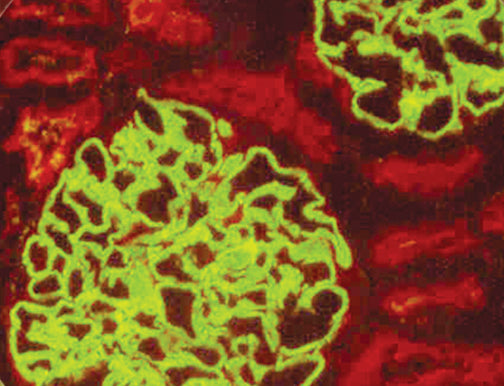
{"type":"root","children":[{"type":"paragraph","children":[{"type":"text","value":"IgG is a monomeric immunoglobulin, comprised of two heavy chains and two light chains. This is the most abundant immunoglobulin and is approximately equally distributed in blood and tissue liquids, constituting 75% of serum immunoglobulins in humans. This is the only isotype that can pass through the placenta and bind to many kinds of pathogens. IgG protects the body against them by complement activation (classic pathway), opsonization for phagocytosis and neutralization of their toxins. There are 4 subclasses: IgG1 (66%), IgG2 (23%), IgG3 (7%) and IgG4 (4%)."}]},{"type":"paragraph","children":[{"type":"text","value":"IgG antibody reacts with surface immunoglobulin IgG gamma chains. This antibody is useful when identifying Leukemias, Plasmacytomas, and B-cell lineage derived Hodgkin’s Lymphomas. Due to the restricted expression of heavy and light chains in these diseases, demonstration of B-cell Lymphomas is possible with clonal gene-rearrangement studies. Lupus nephritis is an inflammation of the kidneys caused by Systemic Lupus Erythematosus. Immunofluorescence reveals positively for IgG, IgA, IgM, C3, and C1q. Clinically, hematuria and proteinuria are present, with or without nephrotic syndromes. Mesangial IgG glomerulonephritis has been recently recognized as a distinct type of glomerulonephritis. The morphologic criteria detected in these patients included mesangial dense deposits by ultra¬structural studies, which were predominantly positive for IgG by immunofluorescence."}]}]}
Antibody Type
Rabbit Polyclonal
Clone
Polyclonal
Isotype
IgG
Localization
Cytoplasmic
Dilution
1:25-1:100
Species Reactivity
Human
Immunogen
Purified human IgG gamma chain.