 US & Canada:
  Email:


 Access IFU & SDS
Summary & Explanation
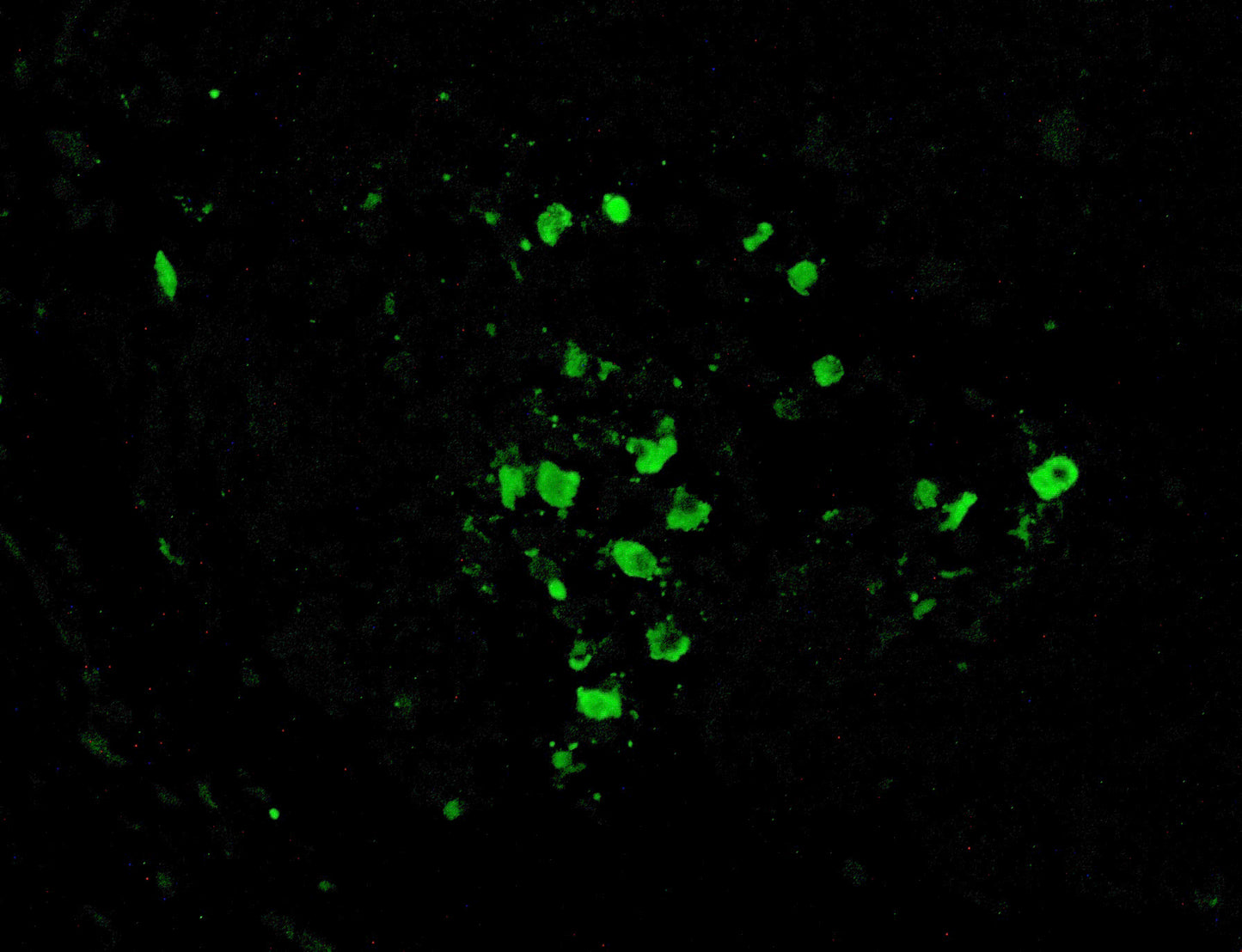
{"type":"root","children":[{"type":"paragraph","children":[{"type":"text","value":"IgD makes up about 1% of proteins in the plasma membranes of immature B-lymphocytes (coexpressed with IgM) and is also found in serum in very small amounts. It is monomeric and incorporates the alpha-heavy chain in its structure. IgD’s function is currently unknown, as mice lacking IgD seem to retain normal immune responses (implying redundancy if not lack of function), and IgD ceases to be expressed in activated B-lymphocytes. It may function as a regulatory antigen receptor. IgD is the major antigen receptor isotype co-expressed with IgM on the surface of most peripheral B cells in mice and humans."}]},{"type":"paragraph","children":[{"type":"text","value":"The IgD antibody reacts with surface immunoglobulin IgD delta chains. This antibody is useful when identifying Leukemias, Plasmacytomas, and B-cell lineage derived from Lymphomas, specifically Marginal Zone Lymphoma. Renal involvement in systemic lupus erythematosus (SLE) is associated with production of antibodies to double stranded DNA, deposition of immune complexes and organ damage. Lupus nephritis patients were characterized by increased percentage of immature/early-transitional B-cells (CD27-IgD+CD21-), higher frequency of activated switched memory (SM, CD27+IgD-CD21-) and exhausted memory B-cells (CD27-IgD-), and decrease in non-switched memory (NSM, CD27+IgD+) B-cells."}]}]}
Antibody Type
Rabbit Polyclonal
Clone
Polyclonal
Isotype
IgG
Localization
Cytoplasmic, Membranous
Dilution
1:25-1:100
Species Reactivity
Human
Immunogen
IgD isolated from a pool of normal human plasma.