 US & Canada:
  Email:


 Access IFU & SDS
Summary & Explanation
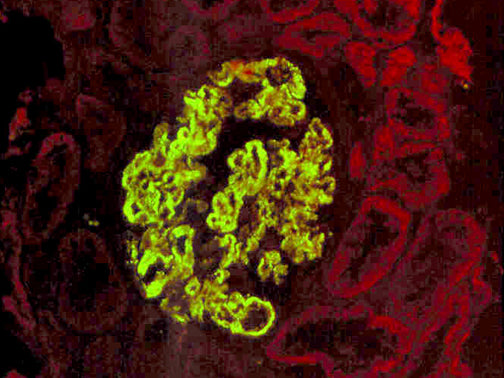
{"type":"root","children":[{"type":"paragraph","children":[{"type":"text","value":"Immunoglobulin A (IgA) is the main immunoglobulin in mucous secretions, including tears, saliva, and colostrum, as well as respiratory, intestinal, prostatic, and vaginal secretions. It is also found in small amounts in blood. Because it is resistant to degradation by enzymes, secretory IgA provides protection against microbes proliferating in body secretions, especially those of the digestive and respiratory tracts."}]},{"type":"paragraph","children":[{"type":"text","value":"IgA antibody reacts with surface immunoglobulin IgA alpha chains. It is extremely useful when identifying Acute Leukemias, IgA Myelomas, Plasmacytomas, and B-cell lineage derived Hodgkin’s Lymphomas. However, due to the restricted expression of heavy and light chains in these diseases, demonstration of B-cell Lymphomas is possible with clonal gene-rearrangement studies. Lupus nephritis is an inflammation of the kidneys caused by Systemic Lupus Erythematosus. Immunofluorescence reveals positively for IgG, IgA, IgM, C3, and C1q."}]}]}
Antibody Type
Rabbit Polyclonal
Clone
Polyclonal
Isotype
IgG
Localization
Cytoplasmic
Dilution
1:25-1:100
Species Reactivity
Human
Immunogen
Purified human IgA secretory component protein.