 US & Canada:
  Email:


 Access IFU & SDS
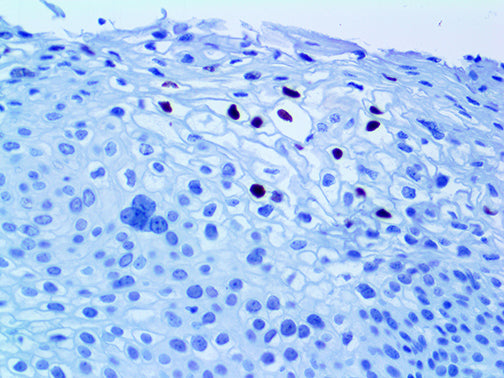
Summary & Explanation
{"type":"root","children":[{"type":"paragraph","children":[{"type":"text","value":"Papillomaviridae belongs to a taxonomic family of non-enveloped DNA virus, collectively known as papillomavirus. Several hundred types of papillomavirus have been identified infecting mammals and also other amniotes such as birds, snakes and turtles. Infection by most papillomavirus types, depending on the type, is either asymptomatic (e.g. most Beta-PVs) or causes small benign tumors, known as papillomas or warts (e.g. HPV1, HPV6 or HPV11). Papillomas caused by some types, however, such as HPV16 and HPV18, carry a risk of becoming cancerous."}]},{"type":"paragraph","children":[{"type":"text","value":"Papillomaviruses are usually considered as highly host- and tissue-tropic, and are thought to rarely be transmitted between species. Papillomaviruses replicate exclusively in the basal layer of the body surface tissues. All known papillomavirus types infect a particular body surface, typically the skin or mucosal epithelium of the genitals, anus, mouth, or airways. Some papillomavirus types can cause cancer in the epithelial tissues they inhabit, cancer is not a typical outcome of infection. The development of papillomavirus-induced cancers typically occurs over the course of many years. Papillomaviruses have been associated with the development of cervical cancer, penile cancer and oral cancers. An association with vulvar cancer and urothelial carcinoma with squamous differentiation in patients with neurogenic bladder has also been reported."}]}]}
Antibody Type
Mouse Monoclonal
Clone
CAMVIR-1
Isotype
IgG2a
Localization
Nuclear
Dilution
1:250-1:1000
Species Reactivity
Human
Immunogen
Human papilloma virus type 16, major caspid protein L1.