 US & Canada:
  Email:


 Access IFU & SDS
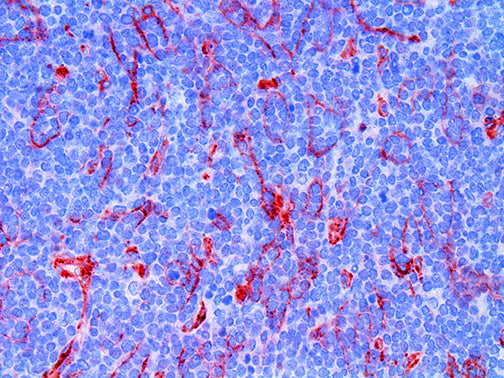
Summary & Explanation
{"type":"root","children":[{"type":"paragraph","children":[{"type":"text","value":"B7-H3, also known as CD276, is a human protein encoded by the CD276 gene. The protein encoded by this gene belongs to the immunoglobulin superfamily, and thought to participate in the regulation of T-cell-mediated immune response. Studies show that while the transcript of this gene is ubiquitously expressed in normal tissues and solid tumors, the protein is preferentially expressed only in tumor tissues, such as melanoma, prostate cancer, and pancreatic cancer. B7-H3 mRNA is not detectable in peripheral blood mononuclear cells, although it is found in various normal tissues and in several tumor cell lines. Expression of B7-H3 protein, however, can be induced on dendritic cells (DCs) and monocytes by inflammatory cytokines. Soluble B7-H3 protein binds a putative counter-receptor on activated T cells that is distinct from CD28, cytotoxic T lymphocyte antigen 4 (CTLA-4), inducible costimulator (ICOS) and PD-1. B7-H3 costimulates proliferation of both CD4+ and CD8+ T cells, enhances the induction of cytotoxic T cells and selectively stimulates interferon gamma (IFN-gamma) production in the presence of T cell receptor signaling."}]},{"type":"paragraph","children":[{"type":"text","value":"Recently, B7-H3 expression has been reported in several human cancers indicating an additional function of B7-H3 as a regulator of antitumor immunity. However, its precise physiologic role is still elusive, because both stimulatory and inhibitory capacities have been demonstrated. B7H3 has been shown in recent years to be of clinical significance in different types of cancer. In some tumor types high expression of B7-H3 has been linked to a poor prognosis, whereas in other cancers the opposite effect has been observed. Taken together, the precise role of B7-H3 in tumor immunity is unclear and further research is needed. Another aspect of B7-H3, that so far has received little interest, is its role in non-immunological systems. It has been demonstrated that knockdown of B7-H3 in melanoma and breast cancer cells results in both increased chemosensitivity and decreased metastatic potential, which has been observed in both in vitro and in vivo experiments."}]}]}
Antibody Type
Rabbit Monoclonal
Clone
RBT-B7H3
Isotype
IgG
Localization
Membranous
Dilution
1:25-1:100
Species Reactivity
Human, Predicted: Mouse
Immunogen
Synthetic peptide conjugated to KLH corresponding to the C-terminal residues of the human B7H3/CD276 protein.