 US & Canada:
  Email:


 Access IFU & SDS
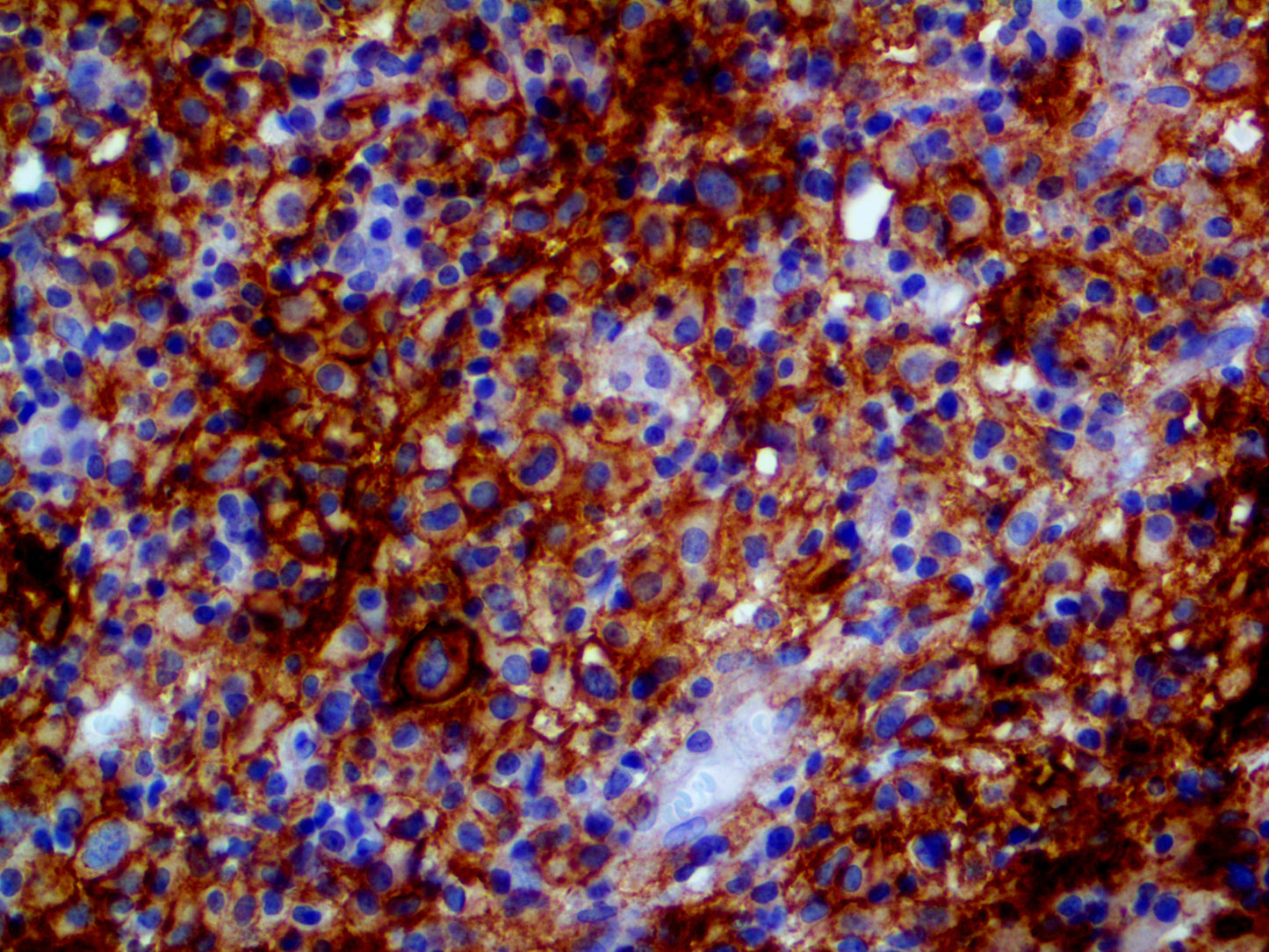
Summary & Explanation
{"type":"root","children":[{"type":"paragraph","children":[{"type":"text","value":"Programmed death-ligand 1 (PD-L1) also known as CD274 or B7 homolog 1 (B7-H1) is a protein that in humans is encoded by the CD274 gene. Programmed death-ligand 1 (PD-L1) is a 40 kDa type 1 transmembrane protein that has been speculated to play a major role in suppressing the immune system during particular events such as pregnancy, tissue allografts, autoimmune disease and other diseases."}]},{"type":"paragraph","children":[{"type":"text","value":"The upregulation of PD-L1 may allow cancers to evade the host immune system. An analysis of tumor specimens from patients with renal cell carcinoma found that high tumor expression of PD-L1 was associated with increased tumor aggressiveness and a 4.5-fold increased risk of death. Ovarian cancer patients with higher expression of PD-L1 had a significantly poorer prognosis than those with lower expression. PD-L1 expression correlated inversely with intraepithelial CD8+ T-lymphocyte count, suggesting that PD-L1 on tumor cells may suppress antitumor CD8+ T cells. The PD-1/PD-L1 interaction is implicated in autoimmunity from several lines of evidence. In humans, PD-L1 was found to have altered expression in pediatric patients with Systemic lupus erythematosus. Studying isolated PBMC from healthy children, immature myeloid dendritic cells and monocytes expressed little PD-L1 at initial isolation, but spontaneously up-regulated PD-L1 by 24 hours. In contrast, both mDC and monocytes from patients with active SLE failed to upregulate PD-L1 over a 5-day time course, expressing this protein only during disease remissions."}]}]}
Antibody Type
Rabbit Monoclonal
Clone
RBT-PDL1
Isotype
IgG
Localization
Membranous
Dilution
1:25-1:100
Species Reactivity
Human
Immunogen
Synthetic peptide corresponding to N-terminus residues of the human PD-L1 protein.