 US & Canada:
  Email:


 Access IFU & SDS
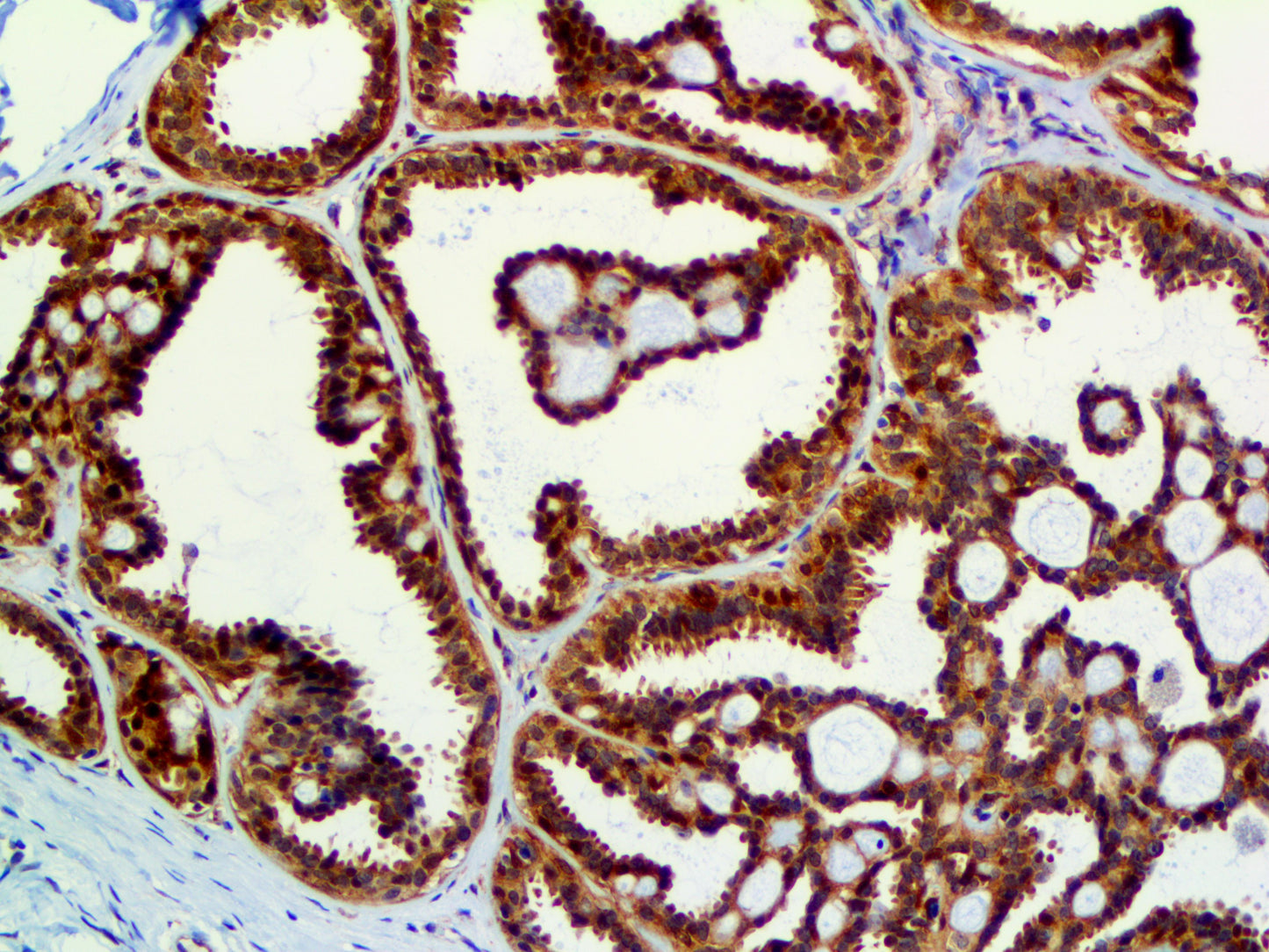
Summary & Explanation
{"type":"root","children":[{"type":"paragraph","children":[{"type":"text","value":"Phosphatase and tensin homolog (PTEN) is a protein that, in humans, is encoded by the PTEN gene. Unlike most of the protein tyrosine phosphatases, this protein preferentially dephosphorylates phosphoinositide substrates. It negatively regulates intracellular levels of phosphatidylinositol-3,4,5-trisphosphate in cells and functions as a tumor suppressor by negatively regulating Akt/PKB signaling pathway."}]},{"type":"paragraph","children":[{"type":"text","value":"PTEN is one of the most commonly lost tumor suppressors in human cancer; in fact, up to 70% of men with prostate cancer are estimated to have lost a copy of the PTEN gene at the time of diagnosis. During tumor development, mutations and deletions of PTEN occur that inactivate its enzymatic activity leading to increased cell proliferation and reduced cell death. Frequent genetic inactivation of PTEN occurs in glioblastoma, endometrial cancer, and prostate cancer; and reduced expression is found in many other tumor types such as lung and breast cancer. In breast and prostate cancer, loss of PTEN expression has been shown to correlate positively with advanced stage. Furthermore, PTEN mutation also causes a variety of inherited predispositions to cancer."}]}]}
Antibody Type
Rabbit Monoclonal
Clone
RBT-PTEN
Isotype
IgG
Localization
Cytoplasmic, Nuclear
Dilution
1:50-1:200
Species Reactivity
Human
Immunogen
Synthetic peptide corresponding to the N-terminus of the human PTEN protein.