 US & Canada:
  Email:


 Access IFU & SDS
Summary & Explanation
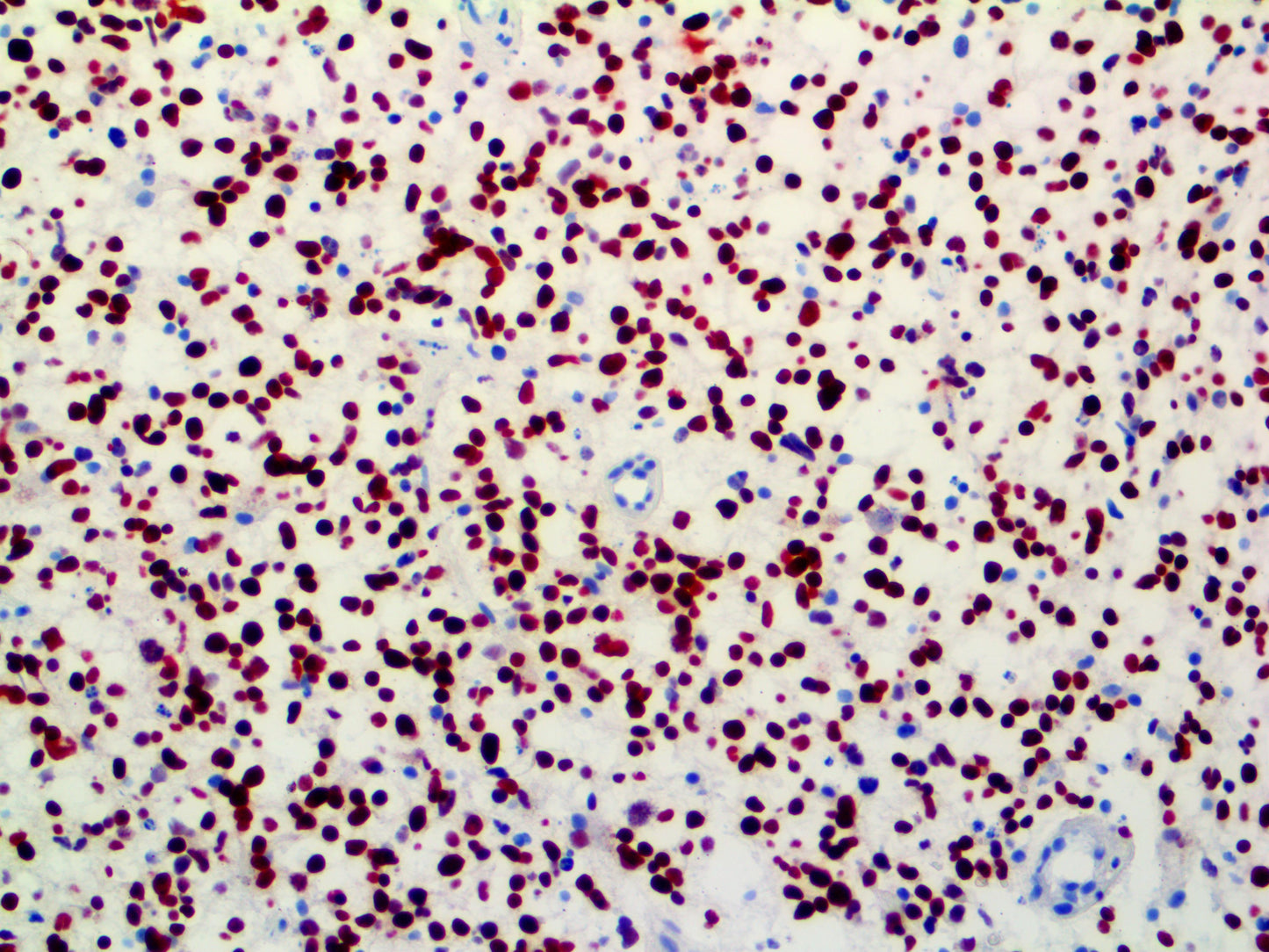
{"type":"root","children":[{"type":"paragraph","children":[{"type":"text","value":"Oligodendrocyte transcription factor (OLIG2) is a basic helix-loop-helix (bHLH) transcription factor encoded by the Olig2 gene. The protein is of 329 amino acids in length, 32kDa in size and contains 1 basic helix-loop-helix DNA-binding domain. It is one of the three members of the bHLH family. The other two members are OLIG1 and OLIG3. The expression of OLIG2 is mostly restricted in the central nervous system, where it acts as both an anti-neurogenic and a neurogenic factor at different stages of development. OLIG2 is well known for determining motor neuron and oligodendrocyte differentiation, as well as its role in sustaining replication in early development. No OLIG2 expression has been found in the non-glial tumors including neuroepithelial tumors, ependymomas, subependymomas, medulloblastomas, and non-neuroepithelial tumors, such as CNS lymphomas, meningiomas, schwannomas, atypical teratoid/rhabdoid tumor, and hemangioblastomas. Compared to the strong staining seen in glioma samples, a weak expression is observed in non-tumoral brain tissue (gliosis). OLIG2 is universally expressed in glioblastoma and other diffuse gliomas (astrocytomas, oligodendrogliomas and oligoastrocytomas), and is a useful positive diagnostic marker of these brain tumors."}]}]}
Antibody Type
Rabbit Monoclonal
Clone
EP112
Isotype
IgG
Localization
Nuclear
Dilution
1:50-1:200
Species Reactivity
Human, Predicted: Mouse
Immunogen
A synthetic peptide corresponding to residues in human OLIG2 protein.