 US & Canada:
  Email:


 Access IFU & SDS
Summary & Explanation
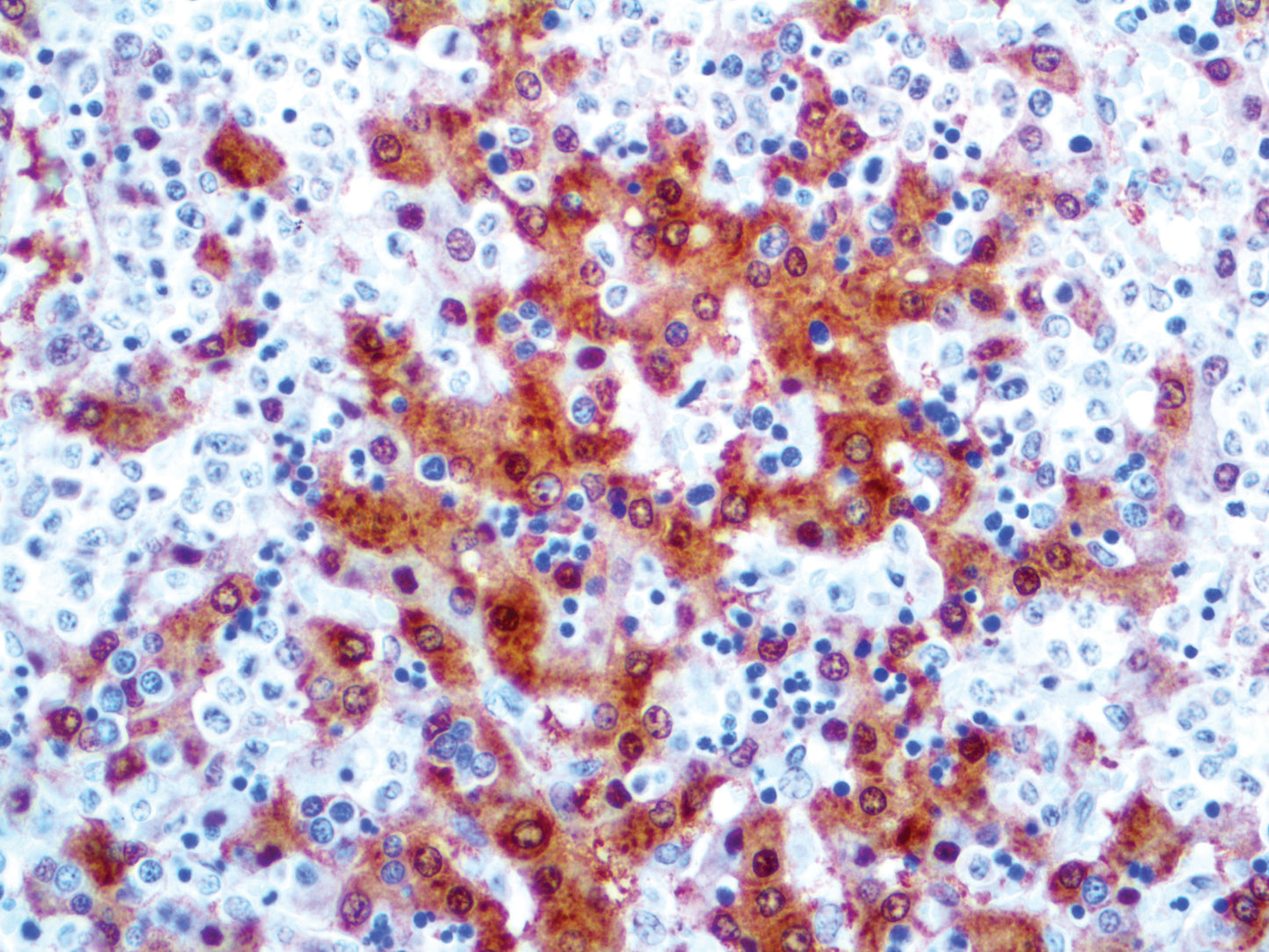
{"type":"root","children":[{"type":"paragraph","children":[{"type":"text","value":"Arginase-1 is the catalyst for the fifth and final step in the urea cycle, which is a series of biochemical reactions in mammals during which the body disposes of harmful ammonia. Arginase-1 works to convert L-arginine into L-ornithine and urea. Arginise-1 is located primarily in the cytoplasm of the liver. Arginase-1\n consists of three tetramers, and the enzyme requires a two-molecule metal cluster of manganese in order to maintain proper function. These Mn2+ ions coordinate with water, orienting and stabilizing the molecule and allowing water to act as a nucelophile and attack L-arginine, hydrolyzing it into ornithine and urea."}]},{"type":"paragraph","children":[{"type":"text","value":"Arginase-1 is abundantly expressed in the liver and it represents a sensitive and specific marker of benign and malignant hepatocytes. In sections of normal liver, anti-arginase 1 produces strong, diffuse cytoplasmic reactivity in all hepatocytes throughout the lobule. In a small percentage of cases, patchy nuclear reactivity\n is also evident in hepatocytes along with the strong cytoplasmic reactivity. Hepatocellular carcinoma usually shows higher protein expression of ARG1 than normal liver cells."}]}]}
Antibody Type
Rabbit Monoclonal
Clone
EP261
Isotype
IgG
Localization
Cytoplasmic, Nuclear
Dilution
1:50-1:200
Species Reactivity
Human
Immunogen
Synthetic peptide corresponding to residues of human ARG-1 protein.