 US & Canada:
  Email:


 Access IFU & SDS
Summary & Explanation
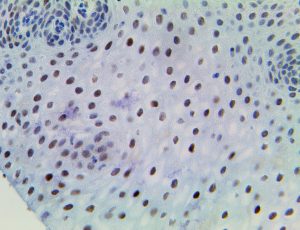
{"type":"root","children":[{"type":"paragraph","children":[{"type":"text","value":"BCOR is located on chromosome X, in the Xp11.4 locus, and derives its name from its function as an interacting corepressor of BCL-6 that enhances BCL-6-mediated transcriptional repression. BCOR is a gene that encodes for an epigenetic regulator involved in the specification of cell differentiation and body structure development. Various BCOR aberrations, represent driver elements of various sarcomas such as Clear Cell Sarcoma of the Kidney, Primitive Mesenchymal Myxoid Tumor of infancy, small round blue cell sarcoma, endometrial stromal sarcoma and histologically heterogeneous CNS neoplasms group with similar genomic methylation patterns known as CNS-HGNET-BCOR. Furthermore, other BCOR alterations (often loss of function mutations) recur in a large variety of Mesenchymal, Epithelial, Neural and Hematological Tumors, suggesting a central role in cancer evolution."}]},{"type":"paragraph","children":[{"type":"text","value":"Using next-generation sequencing, an increasing number of novel gene fusions and other abnormalities have emerged recently in the spectrum of EWSR1-negative Small Blue Round Cell Tumors (SBRCTs). A subset of SBRCTs harboring either BCOR gene fusions (BCOR-CCNB3, BCOR-MAML3), BCOR internal tandem duplications (ITD), or YWHAENUTM2B share a transcriptional signature including high BCOR mRNA expression, as well as similar histologic features. Furthermore, other tumors such as Clear Cell Sarcoma of Kidney (CCSK) and Primitive Myxoid Mesenchymal Tumor of Infancy (PMMTI) also demonstrate BCOR ITDs and high BCOR gene expression. Recent studies have found the IHC of BCOR to be a highly sensitive marker for SBRCTs and CCSKs with BCOR abnormalities and YWHAE rearrangements and can be used as a useful diagnostic marker in these various molecular subsets."}]},{"type":"paragraph","children":[{"type":"text","value":"In another study, Strong diffuse nuclear BCOR staining (defined as >95% of tumor cells) was seen in the round cell component of 20 (100%) classic YWHAE-NUTM2 high-grade Endometrial Stromal Sarcomas and the 3 unusual high-grade Endometrial Stromal Sarcomas. It was concluded that BCOR immunohistochemical staining is a highly sensitive marker for YWHAE-NUTM2 high-grade Endometrial Stromal Sarcomas with both classic and unusual morphology and identifies a subset of high-grade Endometrial Stromal Sarcomas with BCOR alterations, including BCOR rearrangement and internal tandem duplication."}]}]}
Antibody Type
Mouse Monoclonal
Clone
BSB-128
Isotype
IgG1/K
Localization
Nuclear
Dilution
1:10 - 1:25
Species Reactivity
Human
Immunogen
Synthetic peptide corresponding to residues of the N-terminus of the human BCOR protein.