 US & Canada:
  Email:


 Access IFU & SDS
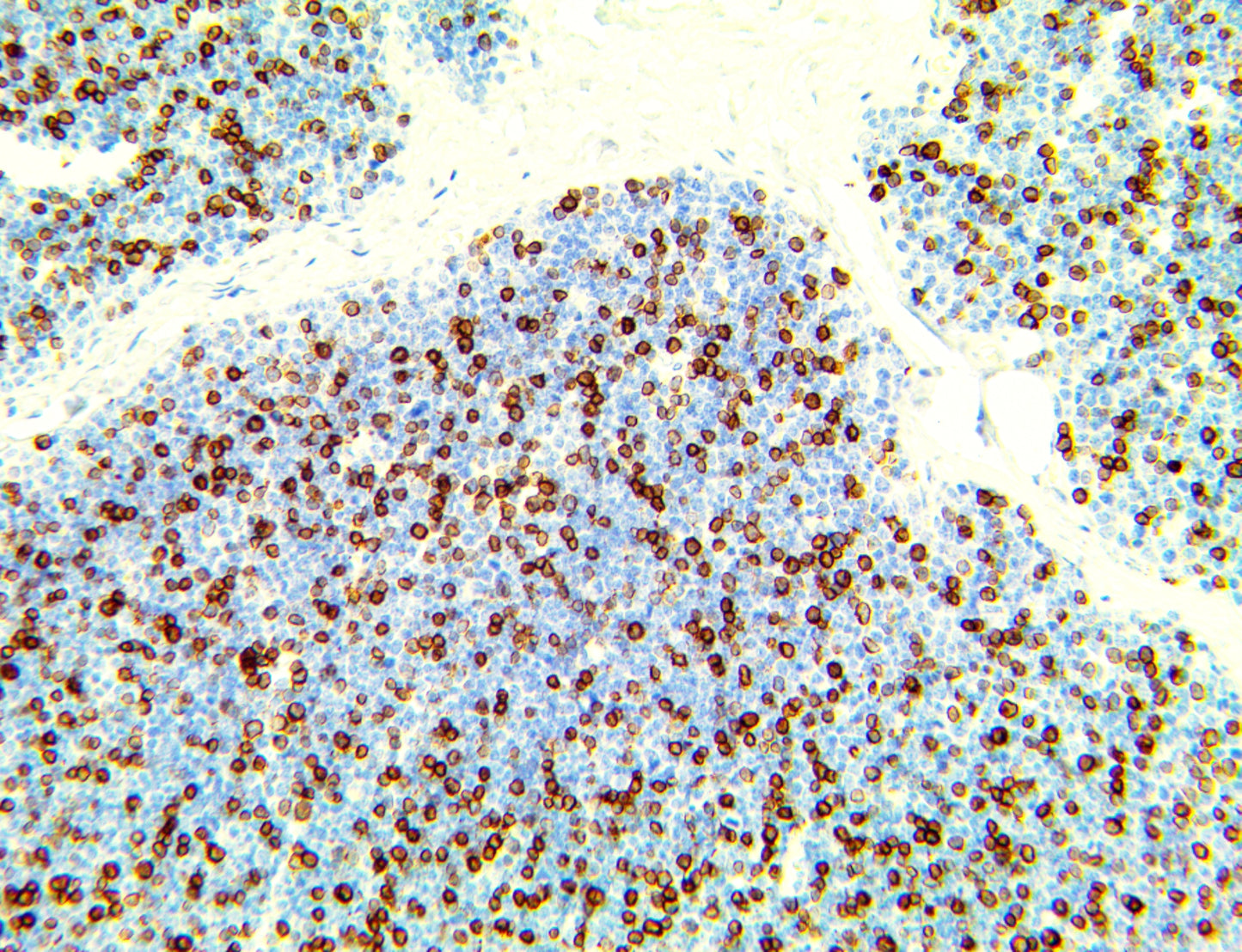
Summary & Explanation
{"type":"root","children":[{"type":"paragraph","children":[{"type":"text","value":"The T cell receptor or TCR is a molecule found on the surface of T lymphocytes (or T cells) that is responsible for recognizing antigens bound to major histocompatibility complex (MHC) molecules. The TCR is composed of two different protein chains (that is, it is a heterodimer). In 95% of T cells, this consists of an alpha (α) and beta (β) chain, whereas in 5% of T cells this consists of gamma and delta (γ/δ) chains. TCR Beta is a member of the immunoglobin super family and a component of the CD3/TCR complex (along with TCR Alpha)."}]},{"type":"paragraph","children":[{"type":"text","value":"TCR Beta is expressed by thymocytes and a majority of peripheral (α-β TCR-bearing) T-cells. TCR recognition of self-peptides has been linked to autoimmune disease. Mutant self-peptides have been associated with tumors."}]}]}
Antibody Type
Mouse Monoclonal
Clone
BSB-117
Isotype
IgG1/K
Localization
Cytoplasmic, Membranous
Dilution
1:25-1:100
Species Reactivity
Human
Immunogen
Human TCR ß chain constant region.