 US & Canada:
  Email:


 Access IFU & SDS
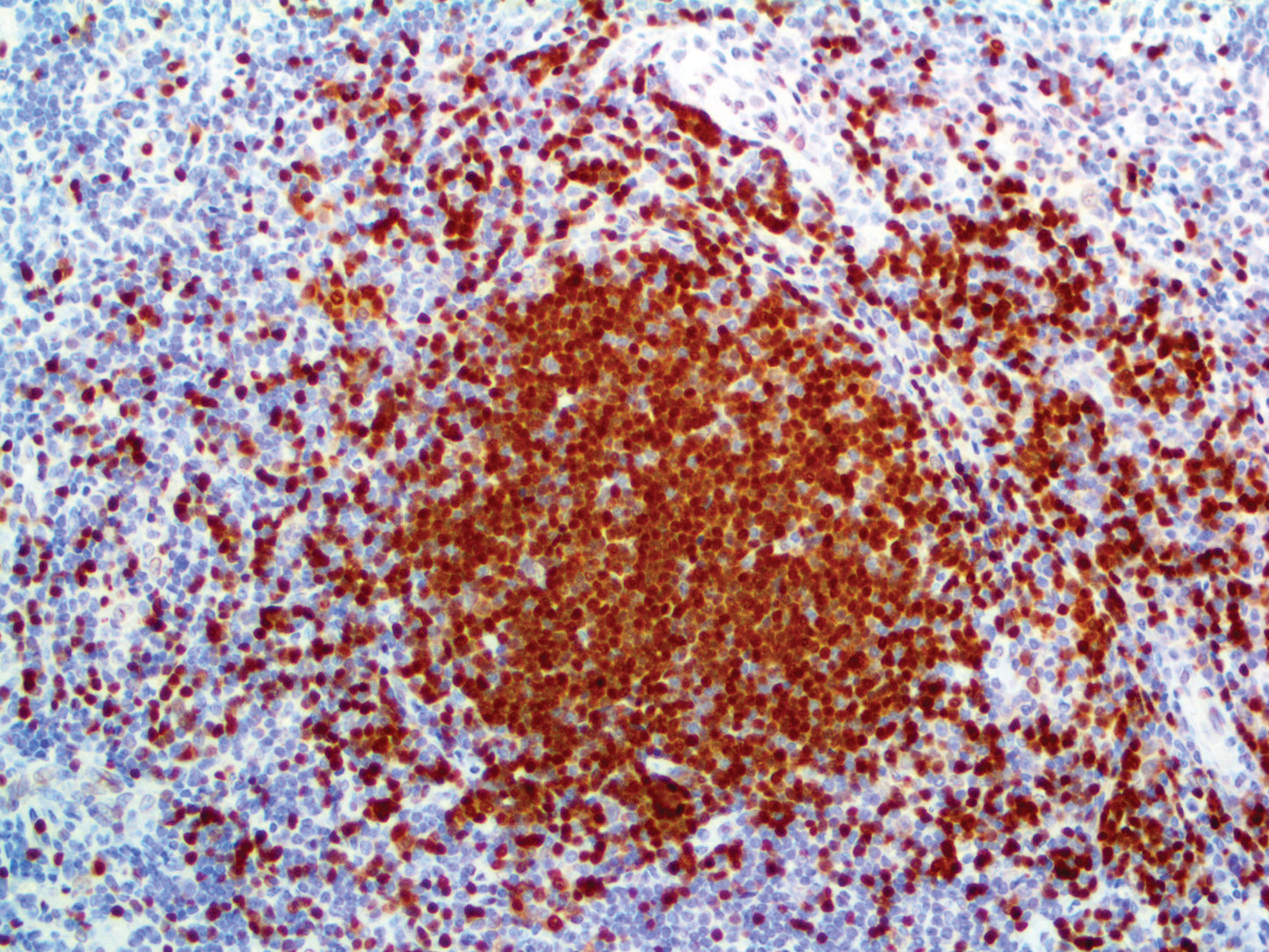
Summary & Explanation
{"type":"root","children":[{"type":"paragraph","children":[{"type":"text","value":"T-cell leukemia/lymphoma protein 1 (TCL1, TCL1A, p14TCL1) is involved in T-cell prolymphocytic leukemia (T-PLL) and is normally found in the nucleus and cytoplasm of lymphoid lineage cells during early embryogenesis. Chromosomal translocations may lead to overexpression of TCL1, resulting in T-cell leukemia"}]},{"type":"paragraph","children":[{"type":"text","value":"and B-cell lymphoma. TCL1 is expressed in more differentiated B-cells, under both reactive and neoplastic conditions, from antigen committed B-cells and in germinal center B-cells. TCL1 is down-regulated in the latest stage of B-cell differentiation."}]},{"type":"paragraph","children":[{"type":"text","value":"TCL1 is overexpressed in Burkitt Lymphoma, the majority of AIDS-related non-Hodgkin’s Lymphoma-designated Immunoblastic Plasmacytoid Lymphoma, Lymphoblastic Lymphoma, Chronic Lymphocytic Leukemia, Mantle Cell Lymphoma, Follicular Lymphoma, Diffuse Large B-cell Lymphoma, and Primary Cutaneous B-cell Lymphoma. Therefore, the most useful application of anti-TCL1 is the discrimination of B-cell lymphomas from T-cell lymphomas, CD30+ Anaplastic Large Cell Lymphomas, Multiple Myeloma, and Marginal Zone."}]}]}
Antibody Type
Rabbit Monoclonal
Clone
EP105
Isotype
IgG
Localization
Nuclear, Cytoplasmic
Dilution
1:100-1:500
Species Reactivity
Human
Immunogen
A synthetic peptide corresponding to residues in human TCL1 protein.