 US & Canada:
  Email:


 Access IFU & SDS
Summary & Explanation
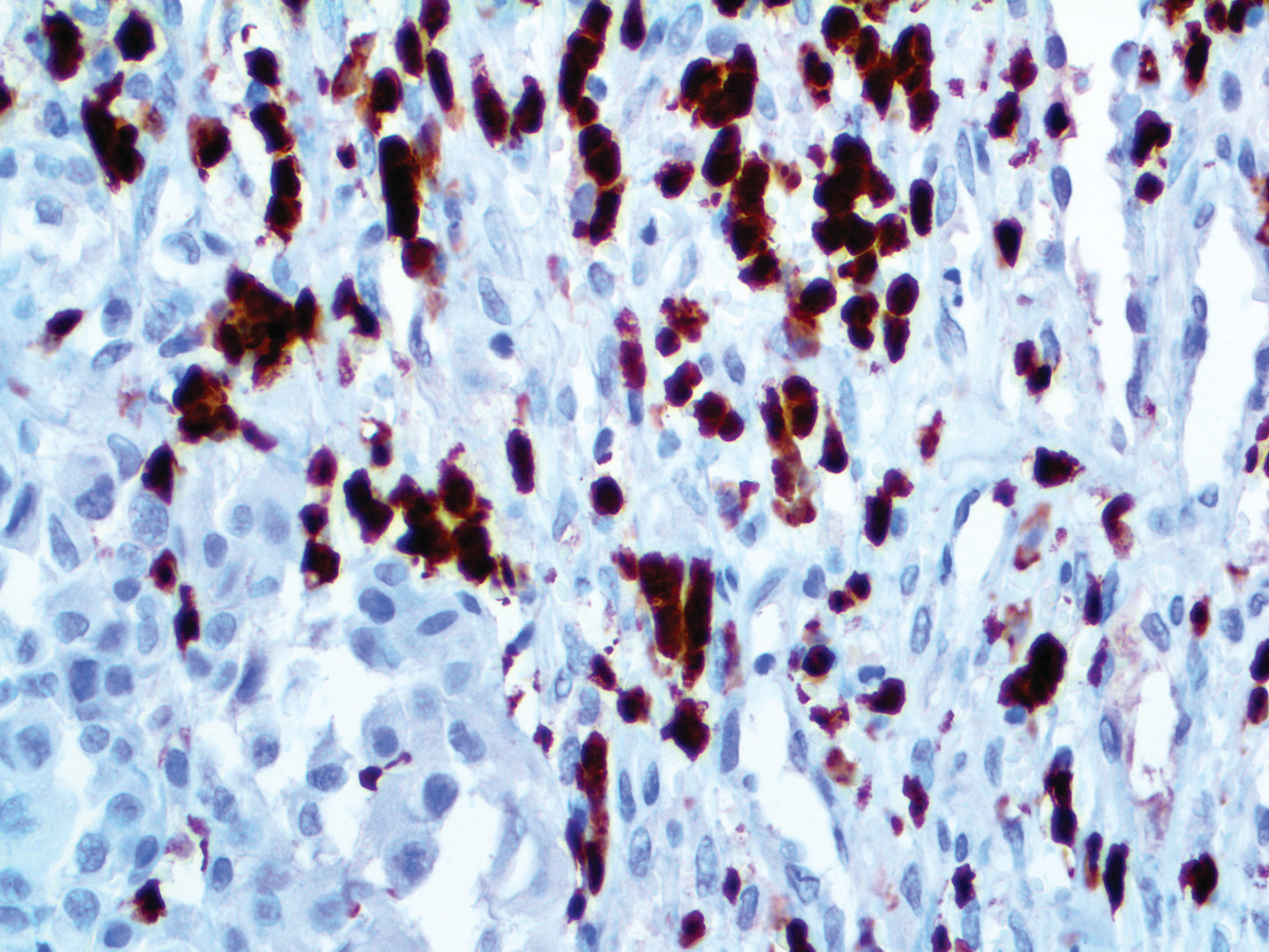
{"type":"root","children":[{"type":"paragraph","children":[{"type":"text","value":"S100P is a member of the S100 family of proteins containing 2 EF-hand calcium binding motifs. S100 proteins are localized in the cytoplasm and/or nucleus of a wide range of cells, and involved in the regulation of a number of cellular processes such as cell cycle progression and differentiation. S100P is expressed in various normal tissues including placenta, bladder, spleen, gastric and intestinal mucosa. Overexpression of S100P has been detected in several cancers such as colon, prostate, pancreatic and lung carcinomas. It has been functionally implicated in carcinogenic processes."}]},{"type":"paragraph","children":[{"type":"text","value":"S100P is an early development marker of pancreatic carcinogenesis and can be used as a marker for pancreatic ductal adenocarcinoma. It may also serve as a predictor of distant metastasis and poor survival in non-small cell lung carcinomas."}]}]}
Antibody Type
Rabbit Monoclonal
Clone
EP186
Isotype
IgG
Localization
Cytoplasmic, Nuclear
Dilution
1:25-1:100
Species Reactivity
Human
Immunogen
A synthetic peptide corresponding to residues of human S100P protein.