 US & Canada:
  Email:


 Access IFU & SDS
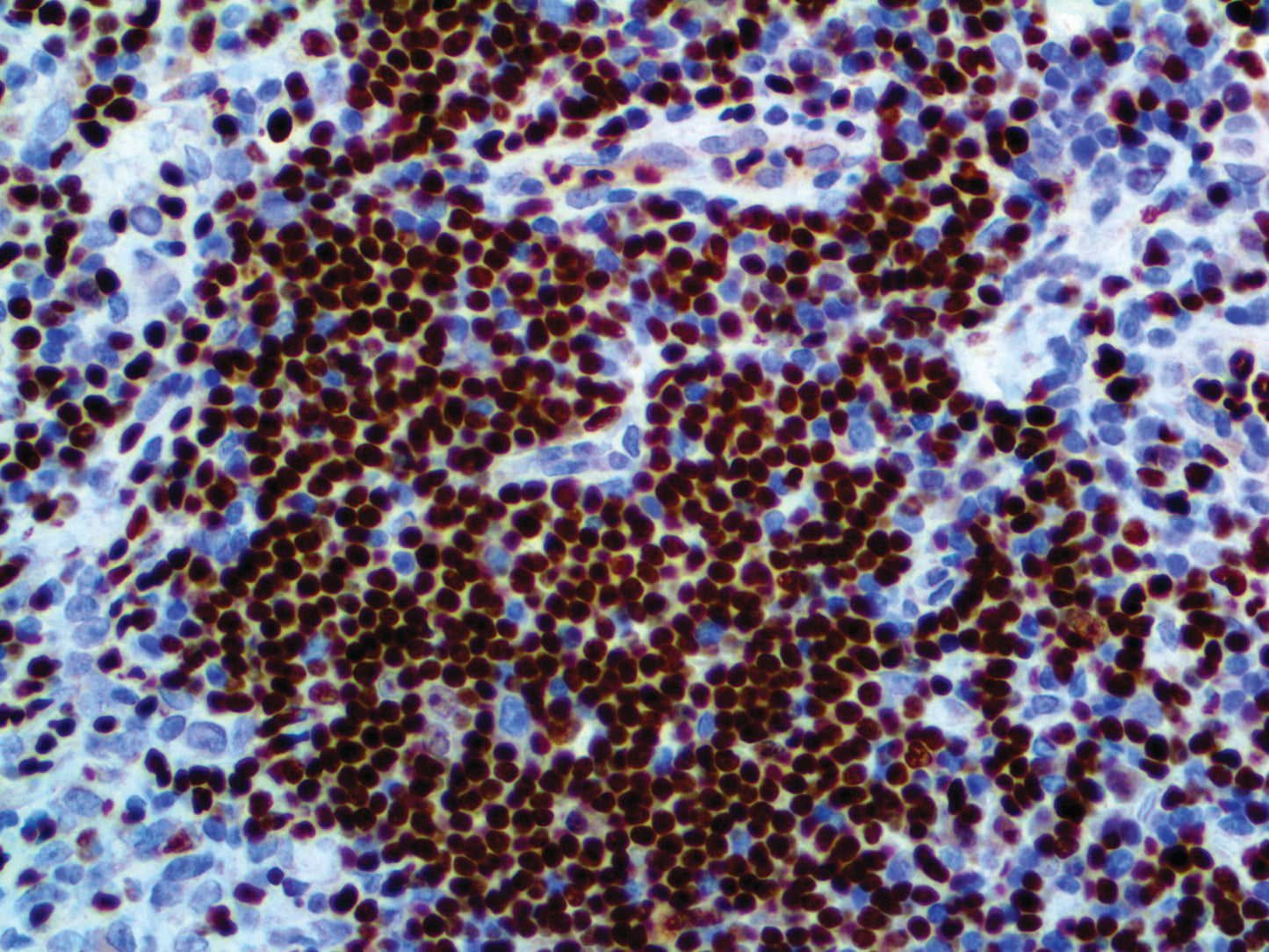
Summary & Explanation
{"type":"root","children":[{"type":"paragraph","children":[{"type":"text","value":"PU.1 is a member of the Ets family of transcription factors and is required for the development of multiple hematopoietic lineages. It plays a pivotal role in normal myeloid differentiation and regulates the expression of immunoglobulin and other genes that are important for B-cell development. It is expressed in the myeloid lineage and in immature as well as mature B lymphocytes, with the exception of plasma cells."}]},{"type":"paragraph","children":[{"type":"text","value":"PU.1 is expressed in germinal center B-cells and mantle B-cells. The antibody is positive in various lymphomas including B-Chronic Lymphocytic Leukemia, Mantle Cell Lymphoma, Follicular Lymphoma, Marginal Zone Lymphoma, Burkitt Lymphoma, Diffuse Large Cell Lymphoma, Diffuse Large B-cell Lymphoma, T-cell rich B-cell Lymphoma, Nodular Lymphocyte Predominant Hodgkin Lymphoma. It has been demonstrated that a high level of expression of GC antigens (including PU.1) has a positive association with longer overall survival and progression free survival in the case of Follicular Lymphoma."}]}]}
Antibody Type
Rabbit Monoclonal
Clone
EP18
Isotype
IgG
Localization
Nuclear
Dilution
1:50-1:200
Species Reactivity
Human
Immunogen
A synthetic peptide corresponding to residues near the N terminus of human transcription factor PU.1 protein.