 US & Canada:
  Email:


 Access IFU & SDS
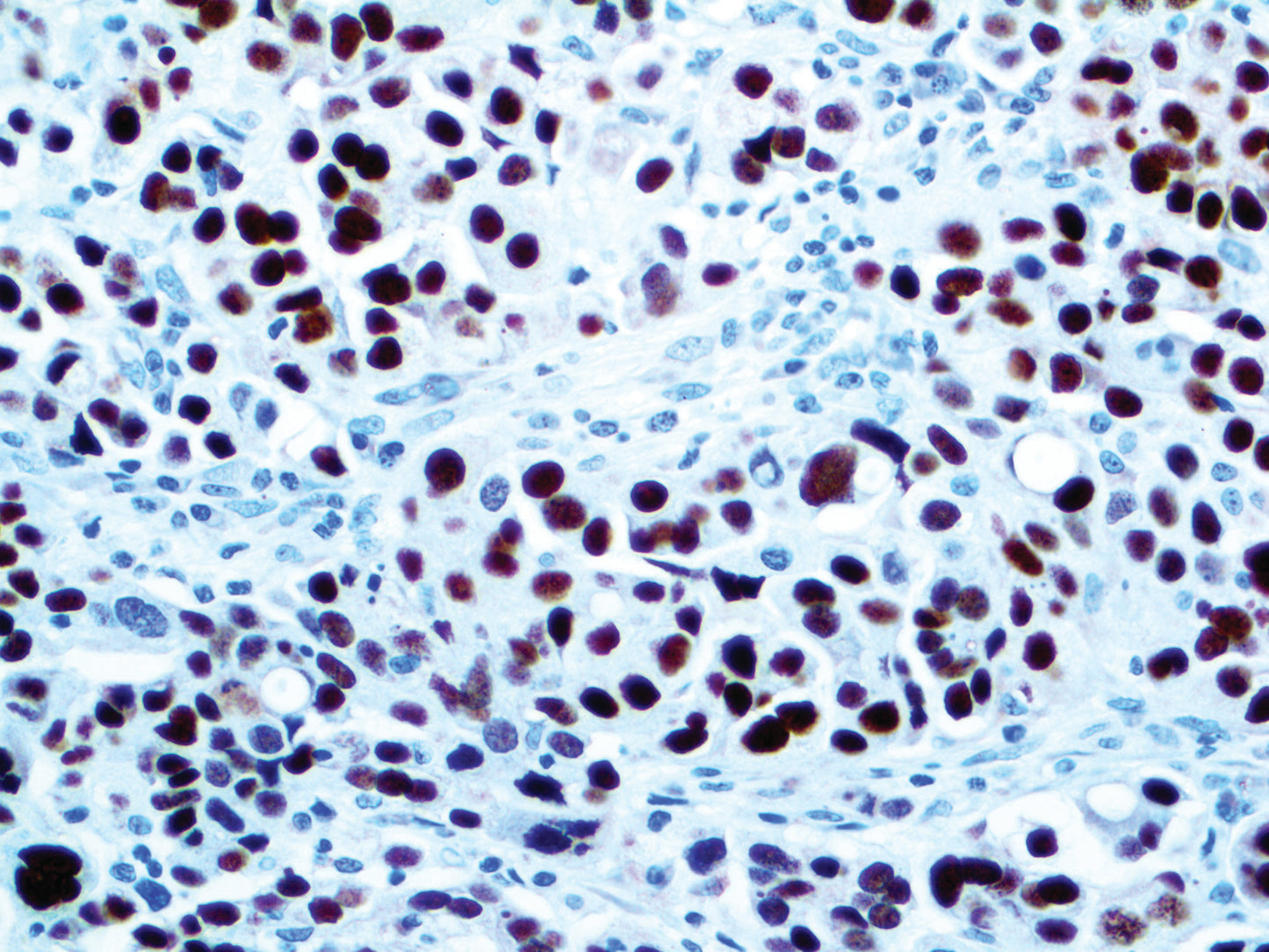
Summary & Explanation
{"type":"root","children":[{"type":"paragraph","children":[{"type":"text","value":"PAX-8 is expressed in the thyroid (and associated carcinomas), non-ciliated mucosal cells of the fallopian tubes and simple ovarian inclusion cysts, but not normal ovarian surface epithelial cells. PAX-8 is expressed in a high percentage of ovarian serous, endometrioid, and clear cell carcinomas, but only rarely in primary ovarian mucinous adenocarcinomas. Studies have also found PAX-8 expression in renal tubules as well as renal carcinoma, nephroblastoma and seminoma. Normal lung and lung carcinomas do not express PAX-8. Similarly, the absence of expression of PAX-8 in breast and other non-GYN carcinomas other than those primary to the thyroid indicates that PAX-8 is an important new marker of ovarian cancer and a useful marker for the differential diagnoses in lung and neck tumors, or tumors at distant sites where primary lung carcinoma or thyroid carcinoma are possibilities. PAX-8, combined with organ system-specific markers such as uroplakin, mammaglobin, and TTF-1 can be a very useful panel to determine the primary site of invasive micropapillary carcinomas of ovary from bladder, lung, and breast."}]}]}
Antibody Type
Rabbit Monoclonal
Clone
ZR-1
Isotype
IgG
Localization
Nuclear
Dilution
1:25-1:100
Species Reactivity
Human
Immunogen
A synthetic peptide corresponding to the C-terminus of Human PAX8 protein.