 US & Canada:
  Email:


 Access IFU & SDS
Summary & Explanation
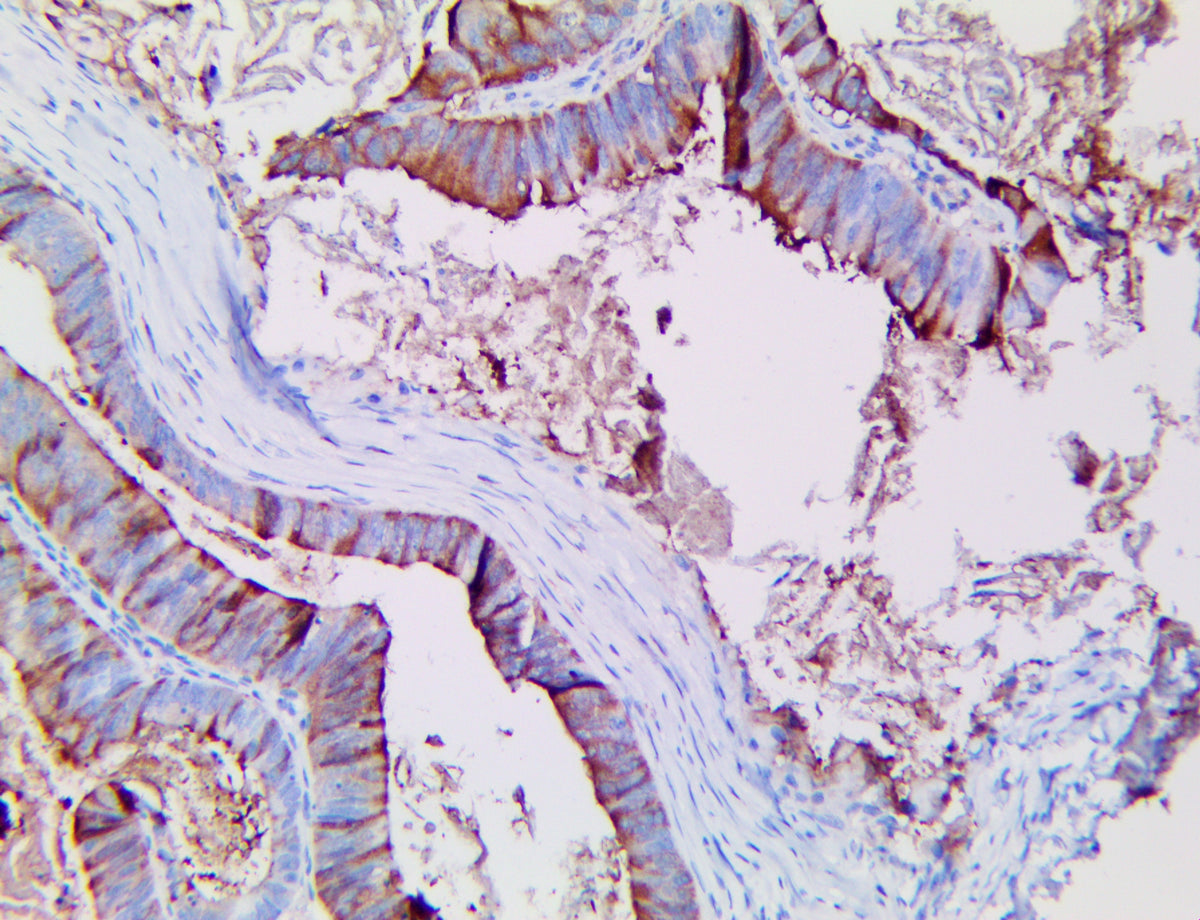
{"type":"root","children":[{"type":"paragraph","children":[{"type":"text","value":"Leucine-rich alpha-2-glycoprotein 1 or LRG1 is a protein which in humans is encoded by the gene LRG1. LRG1 is involved in protein-protein interaction, signal transduction, and cell adhesion and development, particularly in pathways of angiogenesis, where it modulates endothelial Transforming Growth Factor (TGF-β) signaling. LRG-1 also binds to endoglin and EGFR, with positively correlated expression, and inhibition of p38 phosphorylation in the MAPK signaling pathway helped reduce LRG-1-mediated tumorigenesis. Considerable data show that LRG1 is a contributing factor to the disease process in cancer, diabetes, cardiovascular, neurological, and inflammatory disorders. \n Increased serum levels of LRG1 have been correlated with clinical progression in patients with Pancreatic Ductal Adenocarcinoma (PDAC) and Gastric Cancer. Immunohistochemistry on tissue sections demonstrated that alveolar epithelial cells, renal tubular epithelial cells and interstitial cells express LRG1 in the lung, kidney and heart respectively, while cell-specific loss of function in vivo experiments showed that fibroblasts may represent a key source of LRG1 in the normal skin. LRG1 is involved in epithelial-mesenchymal transition and angiogenesis in Colon Cancer, Endometrial Carcinoma, Non-Small Cell Lung Cancer, Ovarian Cancer, Biliary Tract Cancer, and Glioma."}]}]}
Antibody Type
Mouse Monoclonal
Clone
BSB-174
Isotype
IgG2a
Localization
Cytoplasmic, Nuclear
Dilution
1:25-1:100
Species Reactivity
Human
Immunogen
Synthetic peptide corresponding to residues near the C-terminus of human LRG1 protein.