 US & Canada:
  Email:


 Access IFU & SDS
Summary & Explanation
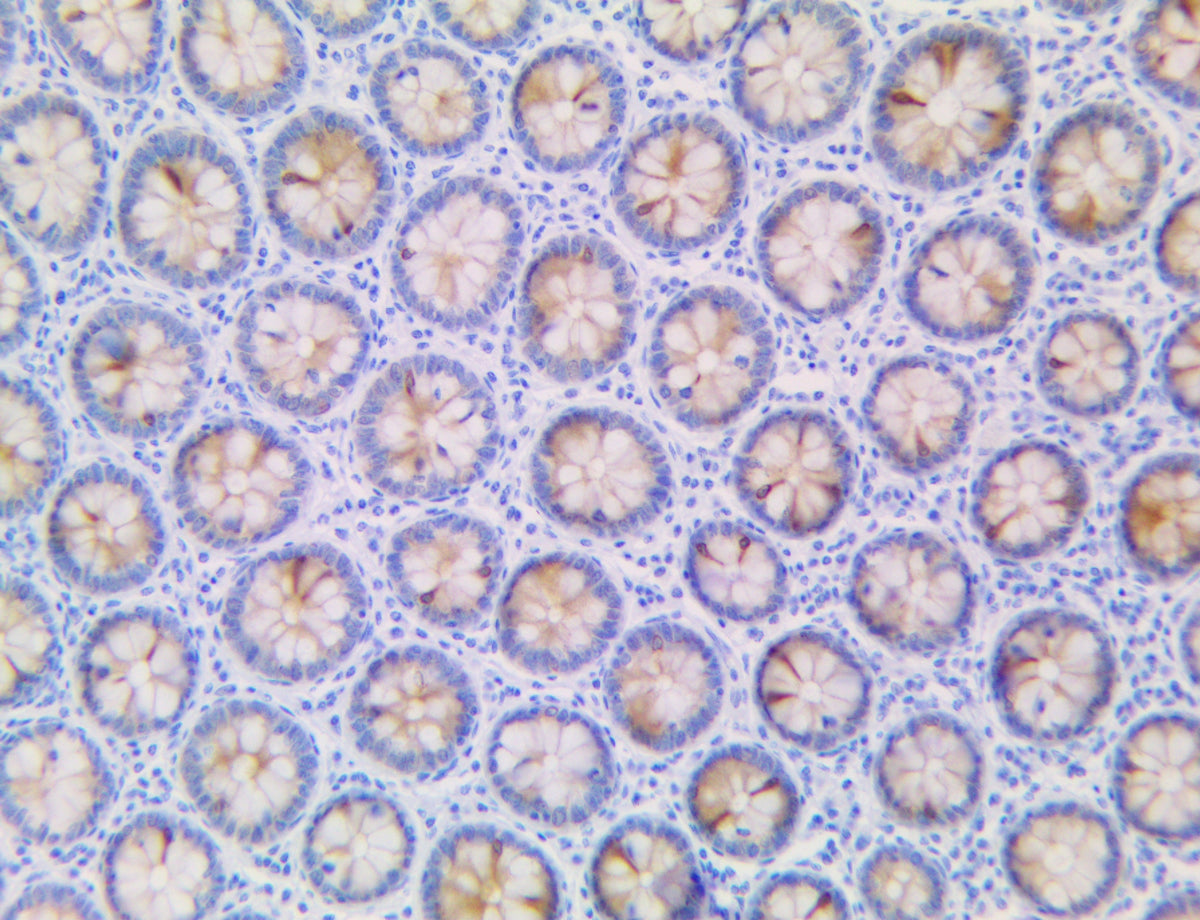
{"type":"root","children":[{"type":"paragraph","children":[{"type":"text","value":"CEACAM7, Carcinoembryonic Antigen-related Cell Adhesion Molecule 7, belongs to the CEA family, a large group of proteins with various roles which are usually dysregulated in tumor growth. CEACAM7 is a GPI-anchored protein with no intracellular domain and a small extracellular domain. CEACAM7 forms a homodimer based on the N-terminal region. \n Compared to other widely expressed CEA family members, expression of CEACAM7 protein is confined to the apical surface of pancreatic ductal cells and epithelial cells of the adult colon tissue. In fetal colon tissues, CEACAM7 is located at the base of epithelial cells but migrates to the apical surface after birth. No expression of CEACAM7 was produced in other areas of the GI tract such as the esophagus, stomach, and small intestine as well as in lung and biliary system tissues. CEACAM7 protein is downregulated in Colorectal carcinoma, Hyperplastic polyps and Tubular Adenomas compared to normal colon tissue. On the other hand, CEACAM7 has strong surface expression on a subset of primary human Pancreatic Ductal Adenocarcinoma (PDAC) epithelial cells compared to normal pancreas cells and all normal tissues tested. Cell surface expression of CEACAM7 was detected in primary cultures from patient-derived PDAC tumors and even from xenografts generated from these PDAC cultures."}]}]}
Antibody Type
Mouse Monoclonal
Clone
BSB-168
Isotype
IgG1
Localization
Cytoplasmic
Dilution
1:25-1:100
Species Reactivity
Human
Immunogen
Synthetic peptide corresponding to residues of human CEACAM7 protein.