 US & Canada:
  Email:


 Access IFU & SDS
Summary & Explanation
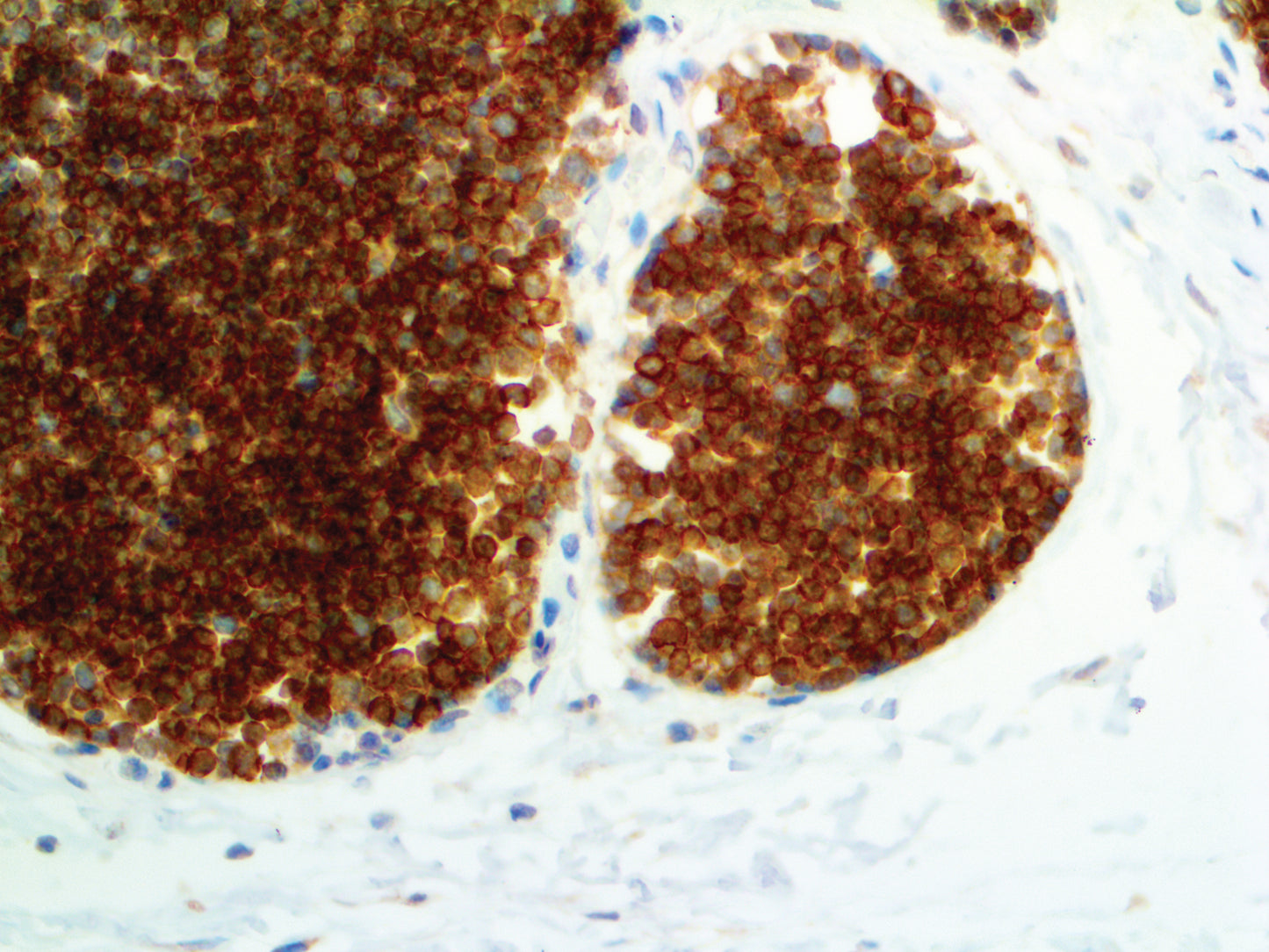
{"type":"root","children":[{"type":"paragraph","children":[{"type":"text","value":"CD99, also known as MIC-2 or single-chain Type-1 glycoprotein, is a human protein encoded by the CD99 gene. The protein has a MW of 32 kDa. It is expressed on all leukocytes but highest on thymocytes, and is believed to augment T-cell adhesion and apoptosis of double-positive T-cells. It also participates in migration and activation."}]},{"type":"paragraph","children":[{"type":"text","value":"The CD99 antigen is found on the cell membrane of Ewing’s Sarcoma and Primitive Peripheral Neuroectodermal Tumors (PNET). It is also present on a variety of other cell types including bone marrow, lymph nodes, spleen, cortical thymocytes, granulosa cells of the ovary, beta cells, CNS ependymal cells, Sertoli’s cells of the testis and a few endothelial cells. Mature granulocytes, however, tend to express very little or no CD99. MIC-2 has also been identified in Lymphoblastic Lymphoma, Rhabdomyosarcoma, Mesenchymal Chondrosarcoma, and Thymoma."}]}]}
Antibody Type
Mouse Monoclonal
Clone
BSB-9
Isotype
IgG1/K
Localization
Cytoplasmic, Membranous
Dilution
1:50-1:200
Species Reactivity
Human
Immunogen
Recombinant human CD99 protein.