 US & Canada:
  Email:


 Access IFU & SDS
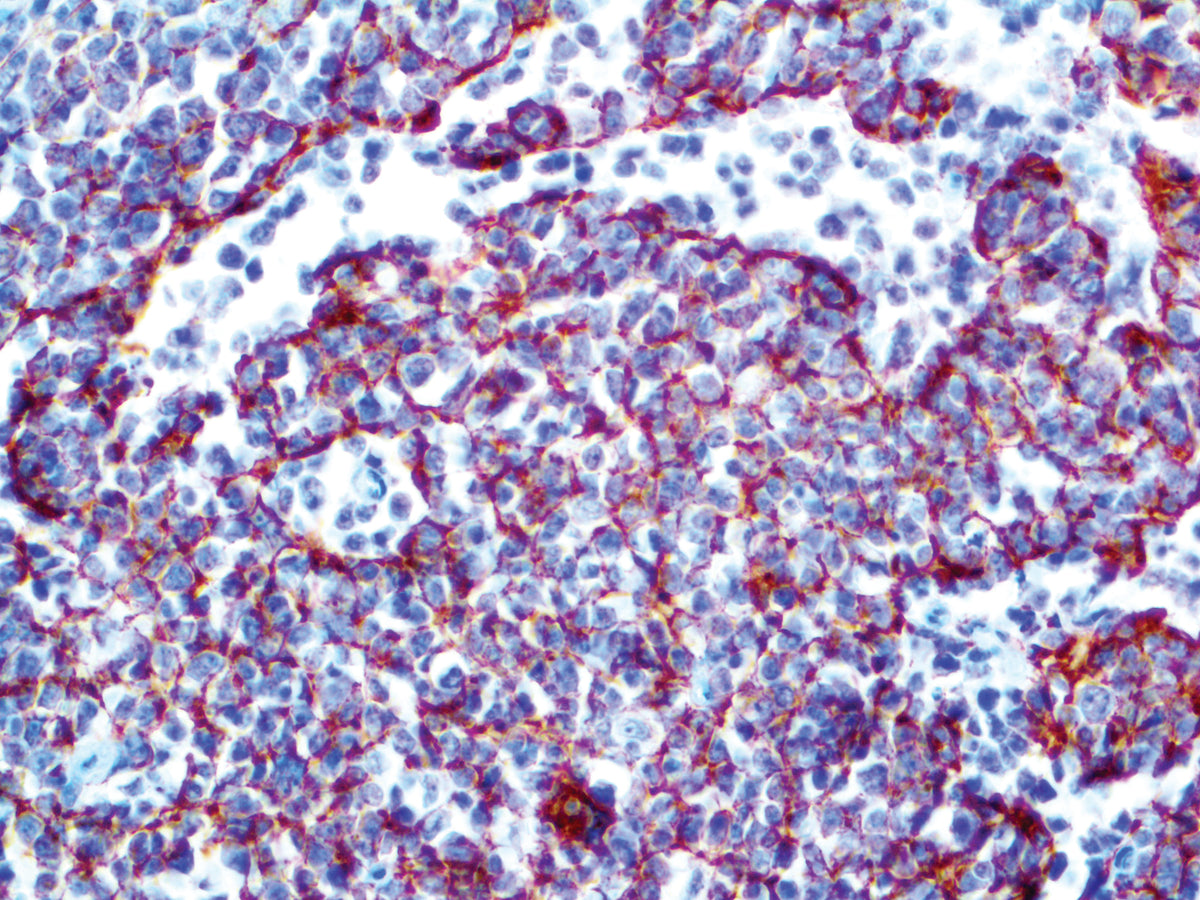
Summary & Explanation
{"type":"root","children":[{"type":"paragraph","children":[{"type":"text","value":"CD35 (erythrocyte complement receptor 1 or CR1, also known as C3b/C4b receptor and immune adherence receptor) serves as the main system for processing and clearance of complement- opsonized immune complexes. The number of CR1 molecules decreases with aging of erythrocytes in normal individuals and is\n also decreased in pathological conditions such as Systemic Lupus Erythematosus (SLE), HIV infection, some Hemolytic Anemias and other conditions featuring immune complexes."}]},{"type":"paragraph","children":[{"type":"text","value":"Anti-CD35 is considered a mature B-cell marker, which labels follicular dendritic reticulum cells and tumors derived from such cells such as Follicular Dendritic Cell Tumor/Sarcoma. CD35 antigen is found in erythrocytes, B-cells, and a subset of T-cells, monocytes, as well as in eosinophils and neutrophils."}]}]}
Antibody Type
Mouse Monoclonal
Clone
RLB25
Isotype
IgG1
Localization
Membranous
Dilution
1:25-1:100
Species Reactivity
Human
Immunogen
Prokaryotic recombinant fusion protein corresponding to the first four complement control protein domains of the CD35 molecule.